

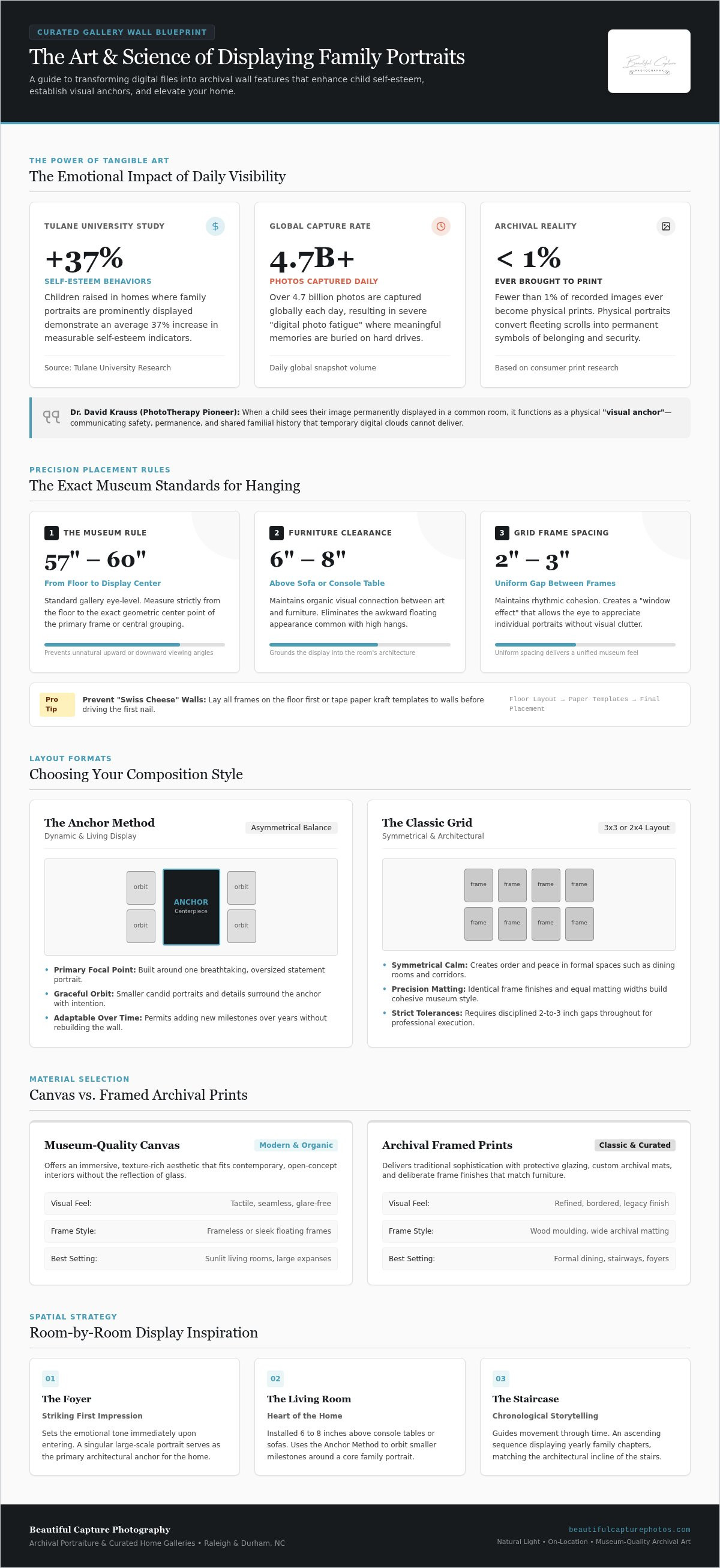
According to research from Tulane University, children who grow up in homes where family photos are prominently displayed show an average 37% increase in self-esteem behaviors. It's a beautiful thought, yet many of us find that our most precious memories remain tucked away on a hard drive or lost in a sea of thousands of digital snapshots. You want your home to feel like a sanctuary of love and belonging, but the fear of making a permanent mistake on your walls often leads to a sense of overwhelm. You might worry about choosing the wrong frame style or wonder how to display family portraits without creating a cluttered look that dates itself within a few years.
We believe your home should be a living gallery of your legacy; a place where every glance at the wall reminds you of what matters most. This guide will show you how to transform your professional portraits into stunning home features that elevate your living space. We'll walk through the process of choosing between museum-quality canvases and archival prints, mastering the "eye-level" rule for perfect placement, and designing cohesive gallery walls that feel both personal and professionally curated. By the end, you'll have the confidence to turn your favorite moments into a timeless display that feels warm and intentional.
Key Takeaways
- Learn why physical prints foster a deeper sense of belonging and identity for your children than digital files tucked away on a hard drive.
- Discover how to display family portraits with professional confidence by using the "Anchor Method" to build a balanced and intentional gallery wall.
- Understand the distinct aesthetic benefits of choosing museum-quality canvases for a modern look versus elegant archival prints for a traditional finish.
- Explore room-by-room inspiration for your home, from making a striking first impression in the foyer to telling a chronological story along your staircase.
- See how a stress-free, on-location session with natural light ensures your portraits feel like organic pieces of art rather than staged studio photos.
The Art of Storytelling: Why Displaying Portraits Matters
In an age where the world captures over 4.7 billion photographs every single day, it's easy for our most meaningful moments to get lost in a digital cloud. While your smartphone might hold thousands of snapshots, these images often remain hidden, rarely revisited and never truly felt. Transitioning from a digital mindset to a physical one is the first step in understanding how to display family portraits as a true reflection of your legacy. When you move those memories off a hard drive and onto your walls, you aren't just decorating; you're creating a sanctuary that celebrates your family's unique story.
From Digital Dust to Daily Joy
Leaving your memories on a cloud server or a USB drive carries a certain risk of "digital photo fatigue." Research suggests that less than 1% of the photos we take are ever printed, which means the milestones of our lives can easily fade into the background of our busy schedules. Seeing a portrait daily reinforces family bonds and provides a constant, gentle reminder of shared history. For children, the impact is even more profound. Dr. David Krauss, a pioneer in the field of PhotoTherapy, notes that when a child sees their image permanently displayed in a common room, it functions as a visual anchor. It communicates a sense of security and belonging that digital files simply cannot replicate. By choosing to print your images, you're telling your family that these moments are worth more than a temporary scroll; they're worth a permanent place in your heart and home.
Portraits as the Heart of the Home
A curated professional portrait does more than fill a space; it sets the emotional tone for your entire house. In Raleigh and Durham homes, where architecture often blends traditional warmth with modern lines, a large-scale portrait can serve as the primary design anchor for a living room or foyer. There is a distinct difference between a casual snapshot and a museum-quality piece of art. Professional photography utilizes natural light and organic movement to capture the essence of your relationships, providing a sophisticated foundation for high-end decor.
When you begin to consider the logistics of your display, you'll find that the choices you make regarding picture frame styles and construction are just as vital as the images themselves. A well-chosen frame protects the archival quality of the print while ensuring the piece complements your existing furniture and color palette. Whether you prefer a sleek, modern finish or a more ornate, classic look, the goal is to create a living legacy. This intentional approach to how to display family portraits ensures that your home feels personal, warm, and deeply connected to the people who live within its walls.
Gallery Wall Layouts: Finding the Perfect Arrangement
The thought of putting a hole in a fresh wall can feel daunting. You want your home to look like a curated gallery, not a collection of haphazard frames. Deciding how to display family portraits begins with understanding the space you have and the energy you want to create. One of the most effective ways to start is the "Anchor Method," where you build your entire arrangement around one large, breathtaking statement piece. This central image acts as the heartbeat of the display, allowing smaller moments to orbit around it with intention and grace.
Planning is the key to avoiding "Swiss cheese" walls. Professional designers recommend laying your frames out on the floor first or using paper templates taped to the wall to visualize the final result. Remember the museum standard: the center of your display should sit roughly 57 to 60 inches from the floor. If you're hanging portraits above a sofa or console, aim for a clearance of 6 to 8 inches above the furniture. This ensures the art feels connected to the room rather than floating in isolation. Taking these steps ensures you feel confident in the process before the first nail ever touches the wall.
Classic Grid Arrangements
Symmetry offers a sense of calm and order that works beautifully in formal dining rooms or long hallways. A clean grid, such as a 3x3 or 2x4 arrangement, utilizes identical frames to create a museum-like aesthetic. For this style to succeed, precision is everything. You should maintain a consistent spacing of 2 to 3 inches between each frame. This uniform gap creates a "window" effect that draws the eye into each individual portrait without feeling cluttered. Using a consistent color palette across your images, perhaps focused on soft neutrals or organic tones, further enhances this polished look.
The Salon or 'Organic' Style
If your home feels more transitional or eclectic, an organic salon-style layout might be your best fit. This approach allows you to mix horizontal and vertical orientations alongside different frame sizes. The secret to a cohesive salon wall is finding a "common thread." This could be a shared color story from your session or a similar lighting style. When you're preserving and displaying family photographs, start from the center and work your way outward to maintain balance. As a calm curator for your family memories, we can help you select the images that best tell your story, ensuring your gallery wall feels like a natural extension of your life.
Canvas vs. Framed Prints: Choosing the Right Medium
Once you have envisioned your layout, the next step in how to display family portraits is selecting the physical medium that will carry your memories through the years. This decision is about more than just aesthetics; it is about how the light in your home interacts with the surface of your art and how those materials will age over time. Choosing between the soft texture of a canvas and the crisp precision of a framed print allows you to tailor your display to the specific "vibe" of each room. While retail stores offer many budget options, the difference lies in the archival longevity that ensures your portraits remain as vibrant as the day they were taken.
The Case for High-End Canvases
For many families, high end canvas prints are the preferred choice for modern, open-concept living spaces. Because canvas lacks a glass covering, it eliminates the harsh reflections often found in rooms with large, sun-drenched windows. This "no-glare" benefit makes it an ideal medium for North Carolina homes where natural light is a central feature. The tactile, painterly texture of the fabric adds a layer of depth and warmth that feels like fine art rather than a standard photograph.
Canvases are also remarkably lightweight, making them a safe and practical choice for large-scale displays over headboards or in high-traffic playrooms. To ensure your investment stays beautiful, it is helpful to follow safe hanging and care guidelines for canvas art, such as keeping the pieces away from direct heat vents. This medium handles ambient humidity well and provides a frameless, contemporary look that lets the focus remain entirely on the unscripted moments of your session.
The Timeless Appeal of Framed Archival Prints
If your goal is to preserve the finest details and richest contrasts, museum quality photo prints are the gold standard. These prints are typically created using pigment-based giclée processes on acid-free paper that meets ISO 9706 standards. This level of quality guarantees a lifespan of 100 years or more without the yellowing or structural degradation common in standard prints. Placing these images behind archival glass is essential. While standard glass only blocks about 40% of UV light, conservation-grade glazing blocks 99% of rays, preventing solar bleaching and keeping your family's legacy intact.
Framing also allows you to utilize mats, which provide "breathing room" around your images and elevate the overall sophistication of the display. This traditional approach is perfect for formal dining rooms, entryways, or primary bedrooms where you want a sense of structured elegance. By matching the frame style to your furniture, you create a cohesive look that feels intentional and warm. Understanding these material differences is a vital part of learning how to display family portraits so they become permanent fixtures of comfort in your home.
Room-by-Room Display Inspiration
Every room in your home carries a unique energy and serves a different purpose. When you consider how to display family portraits, it's helpful to think about how each space functions for your family and your guests. The foyer, for example, acts as your home's first handshake. It is the perfect location for a single, powerful statement piece that welcomes visitors with the warmth of your family's story. In the living room, a larger gallery wall serves as a natural conversation starter during gatherings, drawing eyes toward the milestones you have shared together.
Your master suite, by contrast, is a private sanctuary. This is the ideal place for your most candid, tender moments; those unscripted glances that feel too personal for the more public areas of the house. By matching the emotional tone of your portraits to the purpose of each room, you ensure your home feels both cohesive and deeply personal.
Staircase Galleries: A Journey Through Time
Staircases offer a beautiful opportunity to tell a chronological story of growth. As you move between floors, your walls can mirror the passage of time, perhaps starting with engagement photos and transitioning into the arrival of children and grandchildren. Hanging art on slanted walls requires a bit of extra care to maintain a sense of balance. A professional tip is to follow an angled guide line, placing the bottom of each frame roughly 8 to 10 inches parallel above the handrail. This creates a steady, rhythmic flow that guides the eye naturally as you ascend.
Because staircases are high-traffic areas where frames might be brushed against, it's vital to use professional photography products. High-end mounting and archival finishes ensure that your display remains secure and looks polished from every angle. This approach turns a simple hallway into a meaningful journey through your family's history.
Intimate Spaces: Bedrooms and Dens
In more intimate areas like bedrooms or cozy dens, you can experiment with smaller-scale "clusters" on nightstands, dressers, or floating shelves. These arrangements feel like personal treasures. They allow you to showcase those quiet, organic moments that capture the true essence of your relationships. You don't always need a hammer and nail to make an impact in these rooms.
Utilizing archival wedding albums as coffee table decor in a den or sitting room makes your history tactile. It invites loved ones to sit, linger, and flip through the pages of your legacy. This tactile experience adds a layer of warmth that walls alone cannot provide. If you're feeling inspired to begin your own collection, you can reach out to schedule your session and start the journey of filling your home with art that matters. Knowing how to display family portraits in these varied spaces turns your house into a true home.
The Beautiful Capture Philosophy: Archival Art for Your Home
At Beautiful Capture Photography, we believe that the true value of a portrait session isn't found on a screen, but on the walls of your home. Our approach is built on a "stress-free" promise that guides you from the very first consultation to the moment your custom art is installed. We specialize in on-location sessions that utilize natural light to create organic, unscripted moments. This focus on the environment ensures that your portraits feel like a natural extension of your home's aesthetic rather than a stiff, studio-bound imitation of life. For families in the Raleigh-Durham area, this means your memories are captured in the places that hold meaning for you, resulting in heirlooms that feel deeply rooted in your personal story.
A Collaborative Curation Process
There is a significant difference between simply "getting photos taken" and intentionally creating a collection for your home. As your calm curator, we take on the burden of decision-making, helping you select the specific images that will best complement your home's unique architecture and color palette. We look at the scale of your walls, the direction of your lighting, and the flow of your furniture to ensure every piece fits perfectly. Our commitment to museum-quality materials means that every canvas and print we produce is designed to withstand the test of time, preserving your legacy for generations to come. We don't just deliver files; we deliver tangible pieces of history that grow more precious with every passing year.
Your Next Steps: From Vision to Reality
Turning your vision into reality begins with a simple shift in mindset. Before your session, take a moment to walk through your home and identify the "blank canvases" on your walls. Consider the heights of your ceilings and the tones of your existing decor. When you are ready to begin, booking a family portrait photography session is the first step toward filling those spaces with meaning. We'll work together to plan a day that feels effortless and joyful, ensuring the final results are exactly what you need to elevate your living space.
To ensure a successful display, keep this final checklist in mind:
- Choose a central "anchor" image for large walls to act as a focal point.
- Select archival-grade materials to prevent fading from ambient UV light.
- Maintain consistent spacing of 2 to 3 inches between frames for a unified look.
- Match the frame style or canvas wrap to your existing furniture for a cohesive feel.
Mastering how to display family portraits is a journey of love and intention. It's about more than just decor; it's about making sure your family feels seen, valued, and celebrated every single day. When your home reflects the people you love most, it becomes a place of true comfort and belonging.
Bring Your Family Story to Life
Transforming your home into a gallery of your most cherished memories is more than a design choice; it's a way to surround yourself with love and belonging every day. You now have the tools to understand how to display family portraits with professional confidence, from choosing between the soft texture of a museum-quality canvas and the crisp elegance of a framed archival print. By focusing on intentional layouts and the "Anchor Method," you can create a display that feels both timeless and personal.
We specialize in customized on-location sessions throughout Raleigh and Durham, capturing the organic light and unscripted moments that make your family unique. With our expert curation assistance included, you don't have to navigate the planning process alone. We ensure that every piece meets museum-quality archival standards, guaranteeing your legacy remains vibrant for generations. It's time to move your favorite moments from the digital cloud to your living room walls.
Ready to create your family's wall art? Book your stress-free session today.
Take that first step toward a home that feels warm, personal, and deeply connected. Your story is beautiful, and it deserves to be seen.
Frequently Asked Questions
How high should I hang my family portraits?
The center of your portrait should sit between 57 and 60 inches from the floor. This matches the average human eye level and is the same standard used in professional galleries and museums. If you're hanging a piece in a Raleigh home with ceilings taller than 9 feet, you might nudge that center point toward the 60 inch mark. This ensures your art feels grounded and connected to the room's living space rather than floating too high.
Can I mix black and white photos with color photos in one gallery?
You can absolutely mix black and white with color, though it helps to have a unifying element to keep the look cohesive. Utilizing the same frame style or consistent matting across all pieces creates a visual bridge between the different styles. We often suggest a balanced distribution where color and monochrome images are interspersed. This prevents one area of your gallery from feeling visually heavier than the rest, maintaining a sense of organic harmony.
What is the best room in the house to display large family portraits?
Large family portraits typically find their best home in high-traffic areas like the foyer or living room. In many Durham homes with open-concept layouts, a large statement piece serves as a beautiful anchor for the entire space. The foyer allows you to make a warm first impression for guests; while the living room turns your favorite memories into a central conversation piece. These spaces provide the physical room needed for oversized art to breathe and be admired.
How do I choose the right frame color for my home's decor?
Start by looking at the existing wood tones, hardware, and architectural details in your room. If your Chapel Hill home features modern lines, sleek black or white frames offer a clean, museum-like aesthetic. For a more transitional or traditional feel, brushed brass or natural oak frames complement organic textures and warm light. The goal is to choose a finish that highlights the beauty of the portrait without competing with your other decor elements.
Should I use a professional to hang my gallery wall?
While many homeowners enjoy the DIY process, hiring a professional can ensure a truly stress-free experience for complex gallery walls. Professional installers have the tools to avoid damaging your walls and the expertise to maintain perfect spacing between frames. If you're wondering how to display family portraits in a way that feels permanent and polished, an expert can handle the precise measurements. This allows you to simply relax and enjoy the final, beautiful result.
How do I protect my physical prints from fading over time?
Protecting your prints begins with choosing museum-quality materials that are certified as acid-free and lignin-free. We recommend using conservation-grade glass or acrylic that blocks 99% of UV rays, which prevents the solar bleaching that often occurs in sun-drenched North Carolina rooms. Avoid hanging your most precious pieces in direct path of afternoon sun or near high-heat sources. These simple steps ensure your heirloom-quality products stay vibrant and beautiful for 100 years or more.
Can I mix family portraits with other types of art?
Mixing family portraits with landscapes, travel photos, or even abstract art creates a rich, "salon-style" look that feels deeply personal. The key to making this work is maintaining a common thread, such as a shared color palette or similar frame styles. This approach tells a broader story of your life and interests beyond just a single session. It allows your home gallery to grow and evolve organically as you collect new memories and pieces of art.
What size canvas is best for a standard living room wall?
For a statement piece above a standard sofa, a 24x36 or 30x40 canvas is often the most balanced choice. A good rule of thumb is to ensure the total width of your art covers about 60% to 75% of the furniture's width. This prevents the portrait from looking too small or overwhelmed by the scale of the room. When considering how to display family portraits, choosing a size that fills the visual space creates a sense of intentionality.


