
What if the most precious moments from your wedding or family session didn't just live on a screen, but actually grew more meaningful as the years passed? You've likely felt that flicker of worry when thinking about printing your photos. It's a common fear that even the most beautiful custom canvas wall art might fade or yellow after only a few years on display. You want your investment in professional photography to be protected, not lost to poor materials or passing trends.
I'm here to tell you that your memories deserve better than a standard retail print. You can absolutely achieve that high-end, museum look right in your living room. This guide will show you how to choose archival-quality art that remains as vibrant on its fiftieth anniversary as it was on day one. We'll move past technical jargon to focus on what matters: creating a durable, breathtaking legacy for your family.
We'll explore the science of OBA-free canvases and the "two-thirds" furniture rule that designers use to hang art perfectly. From deciding between a minimalist floater frame and a classic gallery wrap to finding the ideal scale for your specific space, you'll gain the confidence to turn your house into a curated home.
Key Takeaways
- Learn why professional custom canvas wall art utilizes heavy-weight, archival cotton-poly blends to prevent the sagging and fading common in budget retail alternatives.
- Master the "Golden Rule" of sizing to ensure your statement piece perfectly spans 60-75% of your furniture width for a balanced, intentional look.
- Discover how UV-resistant archival laminates act as a protective shield, preserving the vibrant colors of your memories for generations to come.
- Gain the confidence to design a cohesive gallery wall that artfully blends professional portraits with your favorite candid family moments.
- See how a "calm curator" approach removes the burden of technical decision-making, transforming your selection process into a joyful, effortless experience.
Understanding the Difference Between Retail and Professional Custom Canvas Wall Art
When you choose custom canvas wall art for your home, you aren't just buying a print; you're commissioning a physical piece of your family history. In the world of professional photography, a canvas is considered a fine art medium designed to bridge the gap between a digital image and a tangible heirloom. While retail chains often prioritize speed and low costs, they frequently overlook the structural integrity required to keep a memory alive for decades. Professional grade canvas is built with a focus on weight, texture, and chemistry, ensuring that the light and emotion captured during your session remain preserved exactly as you remember them.
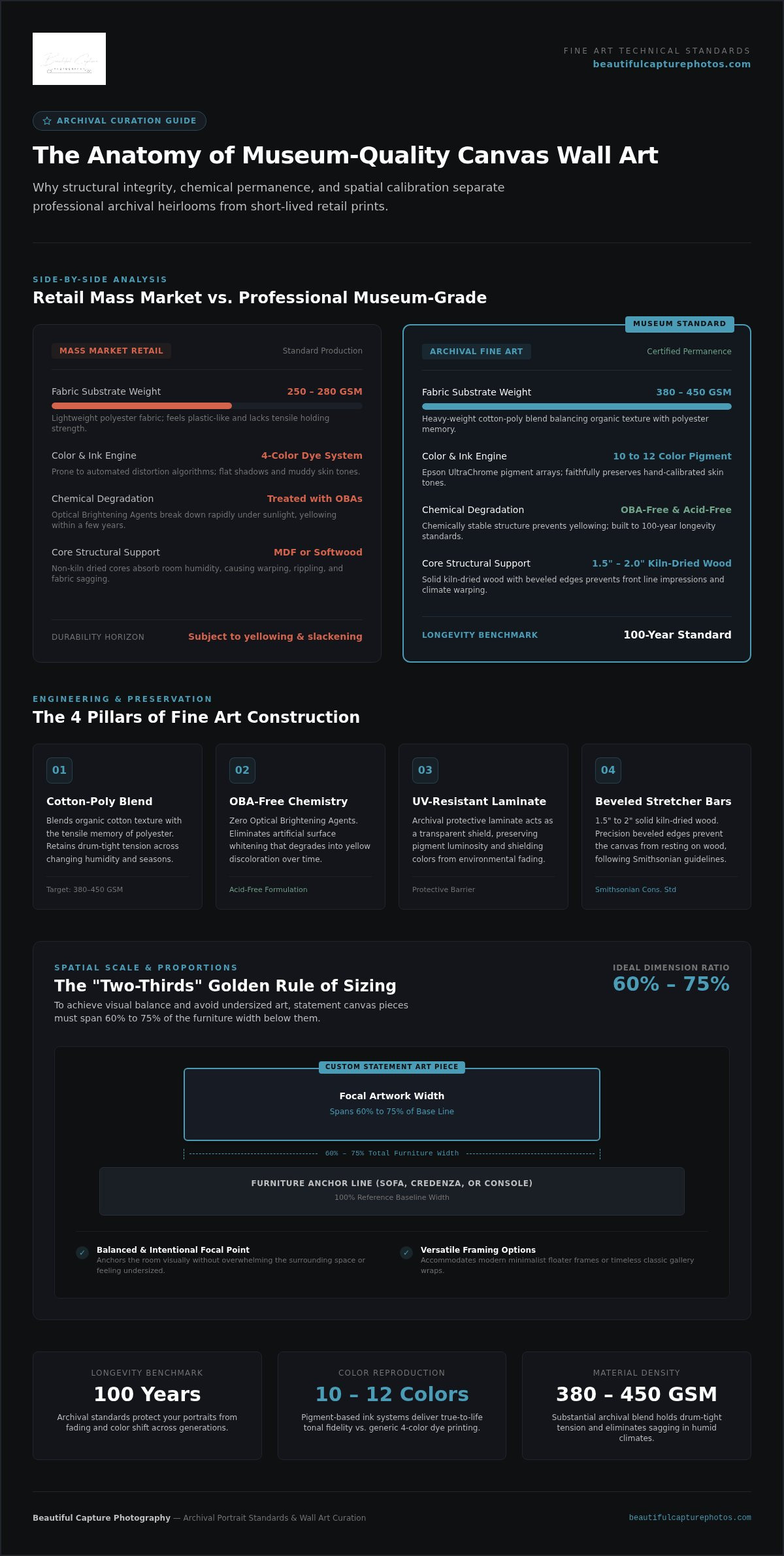
Many homeowners fall into the "cheap print" trap, lured by same day pickup or deep discounts. These mass market products typically rely on lightweight polyester fabrics weighing only 250 to 280 GSM, which lack the strength to hold their shape. Over time, gravity and humidity cause these thin materials to sag or ripple. In contrast, museum quality pieces use heavy weight substrates between 380 and 450 GSM. By understanding the technical side of canvas print processes and stretcher mounting, you can see why professional construction is vital for a piece that stays drum-tight on your wall.
The Longevity Factor: Archival vs. Standard
For a homeowner, the term "archival" is a promise of permanence. It means every component, from the fabric to the glue, is chemically stable. Retail prints often use paper and canvas treated with optical brightening agents (OBAs). These chemicals make the canvas look bright white initially, but they break down quickly when exposed to sunlight, leading to a yellowed, aged appearance within just a few years. Professional custom canvas wall art is OBA-free and acid-free to prevent this degradation. True archival quality ensures that your artwork will maintain its original beauty and structural integrity for a 100-year longevity standard without noticeable fading or color shifts.
Color Accuracy and Professional Calibration
Your photographer spends hours perfecting the skin tones and shadows from your on location portrait session, and those details shouldn't be lost during the printing process. Retail software often uses "auto-correction" algorithms that can distort these intentional edits, making colors look muddy or unnaturally bright. Professional labs use 10 to 12 color pigment based ink systems, such as Epson UltraChrome, which offer a much wider color range than the 4 color dye systems found in budget shops. This precision ensures the final print is a faithful reflection of the artist's vision and your family's genuine connection.
The Anatomy of Museum-Quality Canvas: Materials That Stand the Test of Time
Creating a piece of custom canvas wall art that lasts for generations requires more than just a good photograph. It demands a sophisticated blend of raw materials and engineering. While many retail options use thin polyester fabrics that feel plastic-like, museum-grade canvases utilize a heavy-weight cotton-poly blend, typically weighing between 380 and 450 GSM. This specific mixture provides the organic texture of cotton with the tensile memory of polyester. This ensures your artwork won't slacken or ripple when the seasons change, which is a vital consideration in our humid North Carolina climate.
The internal structure is just as vital as the fabric itself. High-end canvases are mounted on kiln-dried solid wood stretcher bars, usually 1.5 to 2 inches deep. The kiln-drying process removes moisture from the wood, preventing it from warping or bowing over time. Cheap alternatives often use MDF or green softwoods that bend as they acclimate to your home's environment. Following Smithsonian Museum Conservation Institute guidelines, professional frames also feature beveled edges so the canvas never rests directly against the wood, preventing unsightly lines from appearing on the front of the image.
The final choice for your piece is the finish, which dictates how the art interacts with the light in your room:
- Matte Finish: Ideal for rooms with large windows or heavy overhead lighting, as it effectively eliminates distracting glare.
- Satin Finish: Offers a soft, elegant sheen that adds a sense of depth and richness to the colors without being overly reflective.
The Secret to a Sag-Free Canvas
The difference between a standard print and a forever heirloom often comes down to how it's stretched. Machine-stretching is a one-size-fits-all approach that fails to account for the unique grain of each piece of fabric. Hand-stretching allows a craftsman to apply precise tension across the entire surface. This process often includes the use of corner keys, which are small wooden wedges that allow for retensioning the canvas years down the road if needed. You can spot this quality by looking at the corners; they should be neatly folded and tucked, never bulky or stapled haphazardly.
Inks and Coatings for Lasting Vibrancy
The term Giclée specifically refers to high-resolution inkjet printing using archival pigment inks. Unlike the dye-based inks used in retail shops, pigment inks are made of tiny particles of color that sit on top of the fibers. This is why museum quality photo prints retain their depth and clarity for over a century. To finish the piece, a protective UV-resistant laminate is applied. These archival topcoats act as a transparent shield, protecting the pigment layers from moisture, dust, and the fading effects of ambient light. If you're ready to see how these materials can transform your home, feel free to explore our curated portrait offerings.
Sizing and Scale: How to Choose the Perfect Dimensions for Your Space
Choosing the right size for your custom canvas wall art is often the most nerve-wracking part of the process. You've invested in professional photography, and now you want to ensure those images have the impact they deserve. The most common mistake homeowners make is choosing a size that's far too small. An 8x10 print is a lovely gift for a bedside table, but on a grand living room wall, it simply disappears. To create a professional look, follow the "Golden Rule" of design: your artwork should occupy between 60% and 75% of the available wall space. If you're hanging a piece above a sofa or headboard, aim for the canvas to span about two-thirds of the furniture's total width.
Visualizing these dimensions in your Raleigh or Durham home doesn't have to involve guesswork. I always recommend using painter's tape to outline potential sizes directly on your wall. Leave the tape up for a day or two to see how the scale feels as you move through the room. You should also consider the architecture of your space. A tall, narrow wall between two windows calls for a vertical orientation, while the broad expanse above a sideboard is the perfect home for a wide, horizontal statement piece. For larger formats, remember that the structural integrity we discussed earlier becomes even more critical. High-quality tensioning, as described in the Smithsonian Museum Conservation Institute's guide to caring for paintings, ensures that these expansive pieces stay flat and beautiful for years.
Room-by-Room Sizing Recommendations
Every room in your home has a different emotional energy and spatial requirement. In the living room, a large 30x40 or 40x60 canvas creates a sophisticated focal point that anchors the entire space. For a nursery or primary bedroom, mid-sized canvases like a 20x30 or 24x36 offer a softer, more intimate feel. If you're looking to fill hallways or staircases, don't be afraid to utilize vertical space. Stacked layouts or panoramic 16x48 canvases can turn a transitional walkway into a meaningful journey through your family's favorite moments.
Standard vs. Custom Dimensions
While traditional sizes like 16x24 and 24x36 are popular for a reason, many open-concept Research Triangle homes benefit from custom, large-format dimensions. These "statement pieces" prevent the art from being swallowed by high ceilings or wide-open floor plans. Use the table below as a starting point for your curation process.
| Room Type | Typical Wall Size | Recommended Canvas Dimensions |
|---|---|---|
| Living Room (Above 84" Sofa) | 10–12 feet | 40x60 or a 3-Piece Triptych |
| Primary Bedroom (Above King Bed) | 8–10 feet | 30x40 or 30x45 |
| Nursery or Child's Room | 5–7 feet | 24x36 or 20x30 |
| Entryway or Foyer | 4–6 feet | 20x30 or 16x24 |
By matching the scale of your custom canvas wall art to the proportions of your home, you ensure your portraits feel intentional rather than accidental. It's about more than just filling a gap; it's about honoring the memories within the frame.
Styling Your Story: Designing Gallery Walls and Focal Points
Once you've settled on the perfect dimensions, the next step is deciding how your custom canvas wall art will live within your home. Styling is where your personality truly shines, turning a house into a curated sanctuary. You might find yourself torn between a single, breathtaking statement piece or a dynamic gallery wall. A large focal point creates an immediate sense of calm and order, while a gallery wall allows you to blend structured family portrait photography with those unscripted, candid laughs that happen between the poses. This mix feels more organic and tells a richer, more complete story of your life together.
Color coordination is another vital element in creating a cohesive look. You don't need to match your art to your throw pillows exactly, but look for common undertones. If your home features warm woods and cream fabrics, choose portraits with golden hour light or earth-toned wardrobes. For a touch of modern sophistication, consider adding a floating frame to your canvas. These frames create a delicate shadow gap between the art and the wood, giving the piece an architectural structure that looks beautiful in any setting. It's a simple addition that elevates the entire presentation from a simple print to a gallery-worthy installation.
Telling a Narrative with Engagement Photos
Engagement sessions are often filled with movement and variety, making them perfect for a triptych display. By placing three panels side-by-side, you can show the progression of a moment, like a quiet walk through a field that leads into a shared laugh. These unposed, emotional shots often make for the most compelling custom canvas wall art because they capture the genuine spark of your relationship. If you're planning your big day, you might also enjoy our guide on emotional wedding photography, which explores how to ensure these heartfelt moments are captured forever.
Lighting Your Canvas for Maximum Impact
The way light interacts with your canvas can change the mood of the room entirely. While natural light brings out the vibrant colors and rich textures of the fabric, you should avoid hanging your art in direct, harsh sunlight. Even with archival UV-coatings, consistent heat can stress the materials over time. Instead, look for a spot with soft, reflected light. For evening ambiance, dedicated art lighting or adjustable track lights can create a beautiful glow. Because canvas has a subtle, organic texture, directional lighting from above or the side will highlight the "tooth" of the material, adding a sense of three-dimensional depth that traditional paper prints simply can't match.
If you're feeling overwhelmed by the choices, don't worry. I'm here to act as your knowledgeable friend and guide through every step of the creative process. If you are ready to begin creating your own heirloom collection, schedule a consultation for your portrait session today.
The Beautiful Capture Experience: Why Professional Curation Matters
Choosing your final artwork should feel like the joyful culmination of a wonderful experience, not another item on a stressful to-do list. At Beautiful Capture Photography, I believe that the journey from our initial session to the moment you hang your custom canvas wall art is just as important as the image itself. I take on the role of a 'calm curator,' handling the heavy lifting of technical decisions so you can simply enjoy the process of seeing your story come to life. By managing the intricate logistics of cropping, color-matching, and quality control, I ensure that your investment is protected and your vision is realized without any of the guesswork that often accompanies DIY printing.
This partnership is built on transparency and a shared goal of creating something timeless. I don't just hand over a digital file and leave you to figure out the rest; I walk beside you to ensure the physical product matches the emotional weight of the moment we captured. It's about more than just a transaction. It's about a supportive relationship where your comfort and aesthetic vision are the top priorities throughout the entire curation process.
Heirloom Quality for North Carolina Families
Working with a boutique studio in the Raleigh-Durham-Chapel Hill area means you have a partner who understands the local environment and values genuine human interaction. I've spent years vetting specific archival labs that meet my rigorous standards for longevity and color accuracy, specifically for my Raleigh and Cary clients who want the best for their homes. Your family's legacy deserves better than a grocery store print that might fade or yellow before your children are even grown. By selecting only the highest-tier professional photography products, I guarantee that the warmth and light from your wedding or family session will remain vibrant for generations.
How to Get Started with Your Custom Art
Ready to transform your portraits into museum-quality heirlooms? The next step is a relaxed consultation where we'll review your images together and design a gallery that fits your home perfectly. My 'stress-free' promise means I handle the technical details, from ensuring the correct color-space profiles to reviewing sharpening for large-format scaling. Before we finalize your order, we'll walk through this checklist together:
- Verify the canvas is OBA-free and acid-free to prevent long-term yellowing.
- Confirm the stretcher bars are kiln-dried wood to avoid warping in our local humidity.
- Check that the size fills 60-75% of your available wall space for a balanced, intentional look.
- Choose between a matte or satin finish based on the specific light sources in your room.
- Ensure a UV-protective archival laminate is applied for lasting durability and ease of cleaning.
Creating Your Family's Visual Legacy
Your home is the heartbeat of your family's story, and every piece of custom canvas wall art you choose should reflect that warmth and beauty. By prioritizing museum-grade materials like OBA-free substrates and kiln-dried wood, you're ensuring that your most cherished memories won't just sit in a drawer, but will remain vibrant for a lifetime. As we've explored, the right scale and a thoughtful layout are the final ingredients needed to turn a simple photo into a breathtaking heirloom that anchors your living space.
With over 10 years of professional photography experience in North Carolina, I'm dedicated to helping you navigate these choices with ease and joy. I utilize exclusive archival-grade materials and provide a personalized design consultation to ensure your art fits your space perfectly. You don't have to carry the burden of these technical decisions alone. I'm here to guide you through every step of the curation process, from the first click of the shutter to the final delivery of your finished art.
Preserve your memories with our Museum-Quality Canvases and take the first step toward a home filled with art that truly matters. I can't wait to help you tell your story in a way that is both effortless and beautiful.
Frequently Asked Questions
How long do custom canvas prints last?
Museum quality custom canvas wall art is designed to last between 100 and 200 years without noticeable fading or yellowing. This incredible longevity is achieved by using archival pigment inks and OBA-free, acid-free materials. Unlike standard retail prints that often degrade within a decade, these heirloom pieces are built to be passed down through generations of your family here in North Carolina. Maintaining a stable indoor environment helps ensure this structural integrity lasts a lifetime.
What is the best size for a canvas over a queen-sized bed?
For a queen-sized bed, which is 60 inches wide, the ideal canvas width is typically between 36 and 45 inches. This follows the professional design rule of filling about two-thirds to three-quarters of the space above your furniture. A single 30x40 statement piece or a curated triptych of smaller canvases creates a balanced, intentional look that doesn't feel swallowed by the headboard or the expansive walls often found in Cary homes.
Do I need a frame for my custom canvas wall art?
You don't strictly need a frame, as a gallery-wrapped canvas is designed to look beautiful and finished on its own. However, many Raleigh homeowners choose a floating frame to add an extra layer of sophistication. These frames provide a delicate shadow gap that gives your artwork an architectural structure. It's a lovely way to bridge the gap between a modern canvas and a more traditional interior design style without hiding the canvas texture.
Can I turn a phone photo into a large custom canvas?
It's difficult to achieve museum quality results from a phone photo when printing at a large scale. While phone cameras have improved, they often lack the resolution and dynamic range needed for a 30x40 canvas, which can lead to a soft or pixelated appearance. For the best results in your Durham home, I recommend using high-resolution files from a professional on-location session. This ensures every detail remains crisp and vibrant when enlarged for your walls.
How do I clean and maintain my museum-quality canvas?
Maintaining your canvas is remarkably simple because of the protective archival topcoat applied during production. You can safely dust the surface with a clean, dry microfiber cloth or a very slightly damp one if needed. It's best to avoid any harsh cleaning chemicals or glass cleaners, as these can damage the protective laminate. Keeping your art away from direct, harsh sunlight in your Raleigh home will also help preserve the pigment layers for decades.
What is the difference between a gallery wrap and a studio wrap?
A gallery wrap uses thick 1.5 to 2 inch stretcher bars, allowing the image or a coordinating color to wrap around the sides for a standalone look. A studio wrap is much thinner, usually around 0.75 inches, and is typically intended to be placed inside a traditional decorative frame. For a modern, clean aesthetic in your living room, the deeper gallery wrap offers a more substantial, three-dimensional presence that feels like a finished piece of art.
How much space should I leave between canvases in a gallery wall?
I generally recommend leaving 2 to 4 inches of space between each piece in a gallery wall. This consistent gap creates a sense of rhythm and allows each individual portrait to breathe without feeling disconnected from the rest of the collection. If you're working with very large statement pieces in an open-concept Chapel Hill home, you might increase that spacing to 5 or 6 inches to match the grander scale of the architecture.
Is canvas art better than framed paper prints for family portraits?
Both mediums have their own charm, but custom canvas wall art is often preferred for family portraits because it eliminates the glare and reflections common with glass-fronted frames. The organic texture of the fabric adds a tactile, painterly quality that feels warm and inviting. Additionally, canvases are incredibly durable and lightweight, making them a safer choice for high-traffic areas or nurseries where you want a beautiful, low-maintenance display for your memories.


