

What if beautiful engagement photos don’t require perfect sunshine or a practiced pose? A natural light engagement session works with the daylight available, so it can feel relaxed in a range of settings and weather. If you’re unsure when to schedule, worried you’ll look stiff, or wondering how natural light differs from flash, you’re not alone. The aim is not to perform for the camera. It’s to make room for the way you naturally connect.
This guide explains how light affects the mood of your photos and how timing, location, and comfortable outfits can help you feel prepared. You’ll learn what golden hour offers, why overcast skies can work well, and how gentle direction can make movement feel easy. Beautiful Capture Photography offers on-location engagement sessions for couples in Raleigh, Durham, Chapel Hill, Cary, Morrisville, Carrboro, Mebane, Greensboro, High Point, and Winston-Salem. With a photographer guiding you outdoors, you can focus on each other while the light and setting shape the photographs.
Key Takeaways
- Direction, softness, and contrast all affect the feeling of your photographs.
- Compare open shade, tree-filtered light, open fields, and urban streets to find a setting that suits your preferred mood.
- Choose comfortable, coordinated outfits and leave enough time to arrive without rushing.
- A natural light engagement session can feel personal and unforced when the setting reflects your story and direction stays gentle.
- An attentive photographer can adapt to changing conditions and help genuine moments unfold without rigid posing.
What Makes a Natural Light Engagement Session Feel Soft and Genuine?
A natural light engagement session uses available daylight as the primary source shaping the photographs. Light might come from open sky, soften beneath a porch or tree canopy, or shine directly from the sun. Each condition affects brightness, shadows, and mood. Natural light describes an approach to photographing, not a promise of one preset look or a particular location.
In short: natural-light photography uses available daylight to shape an image, lighting style describes its look, and location describes where the session happens. A shaded garden and a sunlit street can both suit this approach, but the portraits will look different. The photographer responds to the conditions in front of them rather than expecting every setting to produce the same softness, contrast, or color.
How does natural light change the feeling of couple portraits?
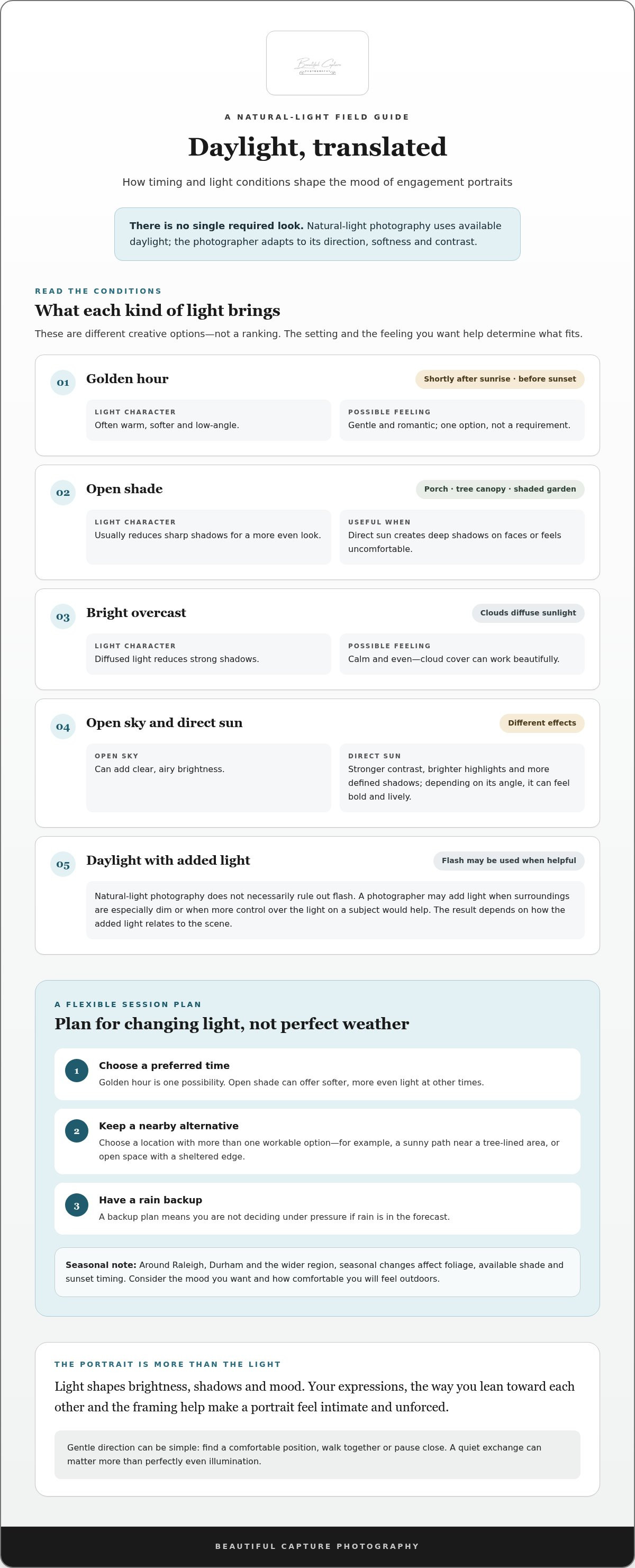
Light has direction as well as intensity. Open shade, like the soft light near a broad window, usually reduces sharp shadows and creates a more even look. Open sky can add clear, airy brightness. Direct sun creates stronger contrast, brighter highlights, and more defined shadows. Depending on its angle, it can feel bold and lively rather than soft.
For a tender mood, the photographer might position you so the light falls gently across your faces, then invite you to walk together or pause close. Light isn’t the whole story, though. Your expressions, the way you lean toward each other, and the framing all help a portrait feel intimate and unforced. A quiet exchange can matter more than perfectly even illumination.
Does natural-light photography mean a photographer never uses flash?
No. Natural-light photography doesn’t necessarily rule out flash. A photographer may add light when the surroundings are especially dim or when more control over the light on a subject would help. That doesn’t automatically make the finished look artificial. The result depends on how the added light is used in relation to the scene.
There isn’t one technique that defines every natural-light photographer. Some portraits rely entirely on daylight, while others may combine it with added light. The guiding idea is that daylight remains central to shaping the image, with choices adapted to the moment and the feeling you want your photographs to hold.
Timing can also influence that feeling. The golden hour, shortly after sunrise or before sunset, is known for softer, warmer light, but it’s one option rather than a requirement. A thoughtful photographer observes how the light falls, then helps you find a comfortable position and natural rhythm within it. Calm guidance leaves more room for connection, even if being photographed feels unfamiliar at first.
How Light, Timing, and North Carolina Weather Shape Engagement Photos
Choosing a session time isn’t about finding one flawless patch of sunshine. In the Triangle and across North Carolina, the season can change the quality of shade, the look of the landscape, and how comfortable you feel outdoors. A flexible plan gives your photographer room to work with those conditions, so the focus stays on your time together rather than the forecast.
Is golden hour the only good time for an engagement session?
No. Golden hour, shortly after sunrise or before sunset, often brings warm color and low-angle light that can feel gentle and romantic. Open shade can offer softer, more even light at other times, while bright overcast skies diffuse sunlight and reduce strong shadows. Each creates a different mood. The right choice depends on the setting and the look you love. For local timing ideas, explore this Raleigh golden-hour portrait timing guide.
What happens when the light or weather changes?
A change in conditions doesn’t have to derail the session. If direct sun creates deep shadows across your faces or feels uncomfortable, moving into open shade can soften the light. Clouds can also act like a natural diffuser, creating a calm, even look. Your photographer can adjust where you stand and how you move to suit the conditions.
For a natural light engagement session, choose a location with more than one workable option, such as a sunny path near a tree-lined area or an open space with a sheltered edge. If rain is in the forecast, make a backup plan so you aren’t deciding under pressure. Seasonal changes around Raleigh, Durham, and the wider region affect foliage, available shade, and sunset timing. Consider both the mood you want and how comfortable you’ll feel outside.
Remember: adaptable timing and a flexible location matter more than a perfect forecast. Your plan can include a preferred time and a nearby alternative, while leaving room for your photographer to respond to changing light. Treating the session as a relaxed date can also help you focus on each other instead of the sky.
If you’re picturing portraits shaped by meaningful scenery and changing natural light, on-location engagement sessions can bring those details together around your relationship.
Natural Light Engagement Session Settings: Shade, Sun, and Open Space
The setting shapes more than the background. It also determines how sunlight reaches your faces and how comfortable it feels to move around. For a natural light engagement session, start with the mood you want, then consider which lighting conditions could support it. The same outdoor spot may offer bright sun, leafy shade, or open sky depending on the season and time of day. A location is not a lighting style by itself.
Across Raleigh, Durham, Chapel Hill, Cary, Morrisville, Carrboro, and nearby communities, these broad setting types can help you picture the possibilities. Couples in Mebane, Greensboro, High Point, and Winston-Salem can use the same considerations when choosing an outdoor backdrop:
| Setting | Light quality | Atmosphere and when it may suit you |
|---|---|---|
| Open shade | Usually softer and more even than direct sun | Calm, intimate portraits, especially if you prefer less squinting and strong facial shadows. |
| Tree-filtered light | Can shift between shade and patches of sun | Organic, layered images; a good fit if you enjoy a sense of depth and a little variation. |
| Open field | Unblocked sky and direct sun, depending on timing | Airy, spacious portraits with room to walk, especially when the light is comfortable. |
| Urban street | Changes with building shade, reflected light, and open sky | Energetic, textured portraits for couples who like a more architectural backdrop. |
When does open shade create the most flattering, even light?
Open shade can soften direct sunlight and make illumination across your faces more consistent. It can be helpful if bright sun feels uncomfortable or creates strong shadows. Shade isn’t automatically shadow-free, however. The photographer also considers where the open sky is: light reaching you from one side may look different from light coming from above or behind. A small change in position can shift the balance.
How do open spaces and tree cover affect the look?
An open space can feel airy, with a broad sky creating a clean, uncluttered backdrop. Trees add texture and intimacy, but their leaves may create shifting patches of brightness on faces or clothing. A bright background can also draw attention away from you, so the photographer may adjust your position or framing to keep your connection at the center.
Rather than choosing a setting based on its name alone, picture how it might work under different conditions. A tree-lined path could offer open shade as well as dappled light. An open field may feel lovely when the sun is gentle but more intense in direct midday light. Your photographer can observe the scene and guide you toward a comfortable spot. For more ideas as you think about scenery and atmosphere, explore this North Carolina engagement-location guide.
How to Prepare for a Natural Light Engagement Session
A little preparation can make your natural light engagement session feel less like a photo appointment and more like time spent together. You don’t need to plan every pose or hope for flawless weather. A simple plan helps you feel comfortable while leaving room for your photographer to respond to the setting and light.
- 1. Choose a mood. Talk about whether you picture a quiet, leafy feel, a more open backdrop, or a lively street setting. Let that preference guide the location instead of trying to recreate someone else’s photos.
- 2. Pick outfits you can move in. Choose clothes that feel like you and suit the setting. Coordinate colors and textures instead of wearing identical outfits, and consider how your choices will look against the background.
- 3. Leave room for changing conditions. Keep your expectations flexible if clouds roll in or the light shifts. Your photographer can adapt the plan, including where you stand and which part of the location you use.
- 4. Arrive ready to connect. Give yourselves a moment to settle in. Walk, talk, and focus on each other while your photographer offers gentle prompts.
What should couples wear for natural-light engagement photos?
Comfort comes first. Clothes that fit well and let you walk, lean in, or hold hands without fuss make it easier to move naturally. Try complementary colors and textures rather than matching exactly, and think about how your outfits suit the surroundings. A breezy field, leafy path, or urban backdrop may each call for a different balance of color and texture. If you’re choosing between outfits, consider which one lets you move comfortably and feels most like something you would normally wear.
How can camera-shy couples feel more at ease?
Feeling self-conscious at first is normal. You don’t have to know how to pose. Walking together, sharing a conversation, or responding to a gentle prompt gives you something natural to do. If you’re still deciding on a backdrop, this engagement photography location guide can help you consider which settings feel most like you.
Perfect weather isn’t a requirement for meaningful portraits. Clouds can soften daylight, and a location with different areas gives your photographer options if the sun becomes strong or the light changes. The aim is to stay present with each other while the photographer guides you toward conditions that work well for the moment.
Ready to plan an engagement session around your preferred setting and a relaxed experience? Explore on-location engagement photography.
Plan a Natural Light Engagement Session That Feels Like You
A thoughtful session brings together the mood you want, a setting that feels personal, and the light available on the day. For couples in Raleigh, Durham, Chapel Hill, Cary, Morrisville, Carrboro, Mebane, Greensboro, High Point, and Winston-Salem, an on-location engagement session can take place somewhere meaningful or in a setting that simply feels like the two of you. The photographer notices how the light and surroundings are working, then guides you with gentle prompts so the experience feels comfortable rather than carefully staged.
What should couples look for in a natural-light photography style?
Look beyond one favorite image. A collection of complete sessions can show how a photographer works across different backgrounds and lighting conditions, from leafy shade to open sky. Notice whether the people in the photographs seem at ease, whether expressions feel genuine, and whether the images feel connected across varied settings. The right style should help you imagine being yourselves, not having to perform.
During planning, share what you’re drawn to and what feels less like you. A natural light engagement session can be shaped around those preferences while staying responsive to the actual conditions. Your photographer can help choose a comfortable spot, offer direction when you need it, and leave space for small moments between prompts.
How can engagement photos become lasting keepsakes?
Once you’ve chosen the images you love, consider how you’d like to enjoy them beyond a digital gallery. Archival prints can bring a favorite moment into your home, a museum-quality canvas can give a meaningful portrait a place on the wall, and an album can gather images into a story you can revisit together. For more context on finished pieces, read this archival photography products buying guide.
Choosing a setting and a photographic style is ultimately about what feels true to your relationship. You don’t need to arrive with every detail decided. A clear sense of the mood you love gives your photographer a helpful starting point, while thoughtful guidance brings the pieces together on location.
Ready to turn your ideas into a relaxed, personal experience? Explore an engagement session and begin planning portraits that feel like you.
Make Space for Photos That Feel Like You
A beautiful natural light engagement session isn’t about finding perfect weather or mastering a pose. It’s about choosing a setting that feels personal, adapting to the available light, and giving yourselves permission to be present with each other. Comfortable outfits and gentle direction can help the experience feel relaxed, while composition and changing natural light shape the mood of your photographs.
With on-location engagement photography, your session can reflect the places and atmosphere that matter to you. When you find images you want to keep close, archival prints, museum-quality canvases, and custom albums offer lasting ways to enjoy those memories beyond a screen.
Ready to begin planning portraits that feel genuine and personal? Explore an engagement session with Beautiful Capture Photography. Bring your story and a sense of the setting you like, then let the experience unfold one meaningful moment at a time.
Frequently Asked Questions
What is a natural light engagement session?
A natural light engagement session uses available daylight as the main source shaping your photos. The photographer works with its direction, brightness, and softness to create a particular mood, whether you’re beneath open sky or in a shaded outdoor setting. It doesn’t guarantee one preset look, and it doesn’t mean every portrait will be shadow-free. Beautiful Capture Photography offers on-location engagement photography for couples in Raleigh, Durham, Chapel Hill, Cary, Morrisville, Carrboro, Mebane, Greensboro, High Point, and Winston-Salem.
Is golden hour best for engagement photos?
Golden hour is a lovely option because sunlight is often warmer and lower in the sky, which can create softer highlights and a romantic glow. It isn’t the only time for appealing portraits. Open shade or bright overcast light may suit your preferred mood and location better. Your photographer can help choose timing based on the look you want and the conditions of the setting.
Can you take engagement photos on a cloudy day?
Yes, cloudy weather can work well for engagement photos. Cloud cover often softens sunlight, which can reduce strong contrast and create even illumination across your faces. The resulting mood may feel gentle and understated rather than warm and sunlit. Your photographer can adapt by choosing a suitable background and position. If rain is expected, having a flexible plan can help you feel prepared without treating clouds as a failed session.
Does a natural light photographer ever use flash?
Yes. Natural-light photography doesn’t necessarily mean a photographer never uses flash. Daylight may remain the primary light shaping the image, while flash can be added when conditions call for extra control or brightness. Photographers differ in how they work, so no single technique defines the approach. The key is how the light supports the scene and the feeling of the portraits, not simply whether additional light is used.
What should we wear to a natural light engagement session?
Choose comfortable outfits that feel like you and allow you to move easily, whether you’re walking, leaning close, or sitting together. Coordinate colors and textures without dressing identically, so your clothing feels connected but doesn’t compete with your expressions. Consider the setting and expected conditions, too. An outfit that feels comfortable on a shaded path may be different from one you’d choose for an open, sunny location.
How do we look natural in engagement photos?
You don’t need to arrive knowing how to pose. Feeling camera-shy at first is normal, and simple movement can make the experience easier. Walk together, share a conversation, or focus on a small moment between you while your photographer offers gentle prompts. Instead of trying to hold a perfect expression, pay attention to each other. Relaxed direction and genuine connection help the photographs feel personal.
What happens if the light changes during our engagement session?
Your photographer can respond to changing light by adjusting your position, composition, or the part of the location you use. If direct sun becomes harsh, open shade may feel more comfortable. If clouds soften the light, that can create a different look. Choosing a location with more than one workable area gives you options. Flexible planning matters more than relying on a perfect forecast.


