
What if your photos could feel natural without leaving everything to chance? If the idea of standing stiffly in front of a camera makes you hesitate, you’re not alone. Understanding what is lifestyle photography can help: it’s a relaxed, story-led approach that makes room for genuine connection while a photographer thoughtfully considers light, composition, and the setting.
Unlike traditional portraits, which often rely on formal poses and camera-facing moments, lifestyle photography focuses on personality and interaction. It isn’t completely hands-off documentary photography, either. Your photographer may offer a simple prompt or suggest where to stand, helping you feel comfortable while the images still look and feel like you.
In this guide, you’ll learn what defines lifestyle photography, how it compares with other approaches, and which occasions and settings can suit it. You’ll also find practical ways to prepare, from choosing a meaningful location to picking comfortable clothes. Whether you’re considering family portraits, engagement photos, or a celebration, you’ll be better prepared to choose a style that fits your people and the memories you want to keep.
Key Takeaways
- Learn what is lifestyle photography and how gentle guidance can shape natural, story-led images.
- See how lifestyle photography differs from formal portraits and fully undirected documentary images.
- Discover when this approach can suit families, couples, engagements, weddings, and special occasions.
- Use a simple preparation plan to choose a meaningful setting and comfortable clothing without memorizing poses.
- Explore how on-location photography around Raleigh and the Research Triangle can bring personal settings into your portraits and celebrations.
What Is Lifestyle Photography? A Clear Definition for Beginners
Lifestyle photography records real connection in a thoughtfully chosen setting. It shows people relating to one another in ways that feel personal, while the photographer considers light, composition, and the details that give a scene its atmosphere. The result is more than a record of who was present: it offers a glimpse of how a moment felt.
So, what is lifestyle photography in practice? It sits between a formal portrait and a completely unobserved record. A photographer might suggest where to stand, invite people to walk together, or make a small adjustment to use the available light. That guidance shapes the image without dictating every expression, gesture, or interaction.
The What is Lifestyle Photography? overview also describes the style in relation to traditional posed photography. A useful distinction is this: A conventional portrait often asks people to present themselves to the camera; a lifestyle portrait makes room for them to connect with each other. A session may include a few composed frames, then leave space for movement and natural responses.
That balance is part of the craft. The photographer considers what belongs in the frame, how the setting supports the story, and when to offer guidance or step back. A familiar room, a favorite outdoor spot, or a shared activity can add context without elaborate staging. Natural doesn’t mean uncontrolled, and it doesn’t mean every image is candid. It describes an approach that prioritizes believable connection over rigid posing.
What makes a lifestyle photograph feel natural?
Interaction gives an image a sense of life: a parent listening to a child, a couple sharing a joke, or friends turning toward the same moment. Movement, such as walking side by side or reaching for someone’s hand, can help people settle into the scene. Familiar surroundings add personal detail, while gentle prompts invite expressions that feel true to the people in the photograph rather than copied from a pose.
The photographer still makes choices about framing and timing. A natural-looking image may be carefully composed, and a session can include both lightly directed and unprompted moments. The goal isn’t to make everyone ignore the camera. It’s to help people feel at ease enough to focus on one another.
What kinds of stories can lifestyle photography preserve?
Lifestyle photographs can hold everyday connection, milestones, and celebrations. The story might be quiet, like siblings absorbed in a shared activity, or occasion-focused, like a couple enjoying a wedding-day pause. A glance, a hand resting on a shoulder, or the way people gather in a familiar place can give a photograph meaning beyond its date and location.
There’s no single format. Some stories call for a calm setting and a little guidance; others unfold amid movement and company. What matters is choosing details that reflect the people and occasion, so the finished images feel connected to a real relationship rather than a template.
Lifestyle Photography vs. Traditional Portraits and Documentary Photography
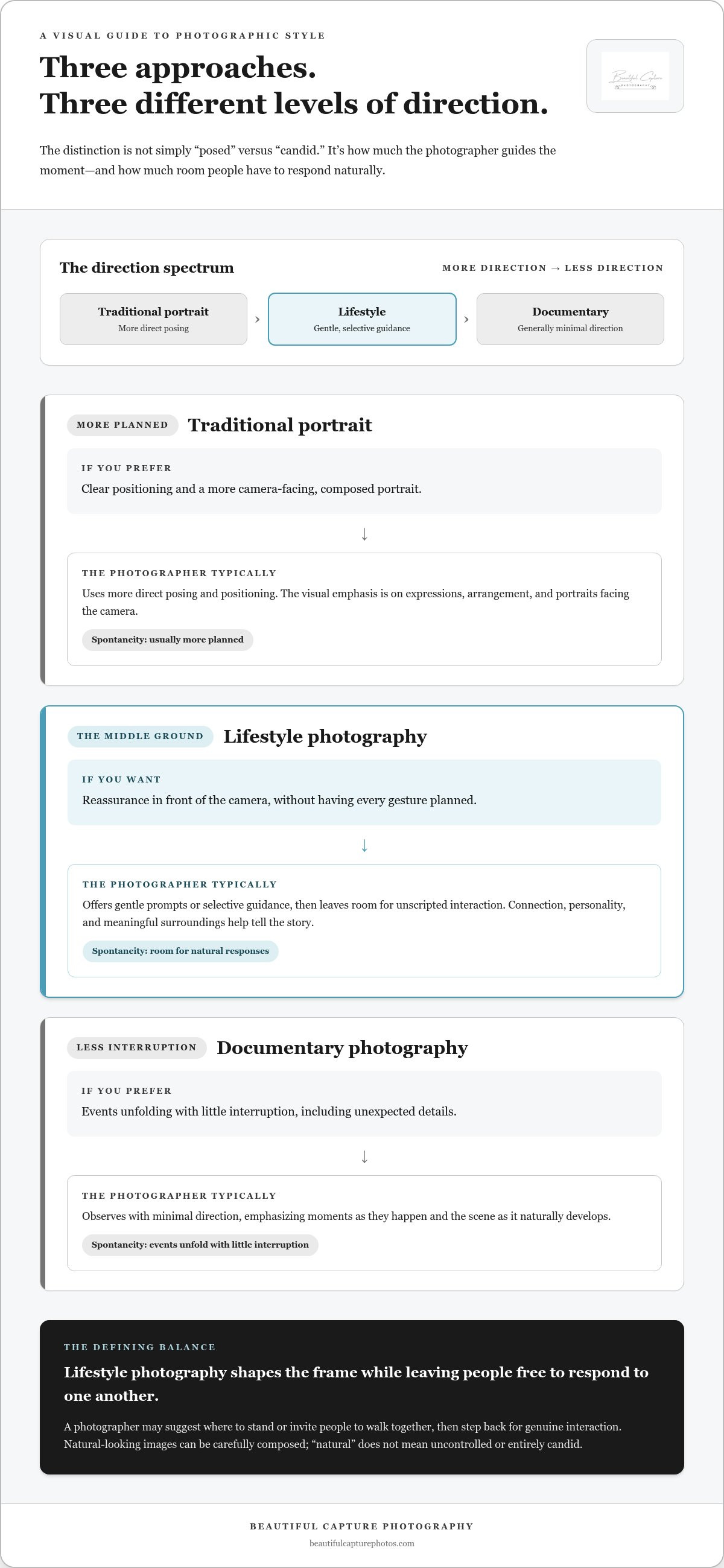
Choosing a photography style is less about finding the “best” approach and more about deciding how you want the moment to be remembered. If you’re weighing what is lifestyle photography against a traditional portrait or documentary coverage, consider how much direction you’d enjoy and whether you want the setting to help tell the story.
| Approach | Photographer direction | Spontaneity | Typical visual emphasis |
|---|---|---|---|
| Traditional portrait | More direct posing and positioning | Usually more planned | People’s expressions, arrangement, and camera-facing portraits |
| Lifestyle photography | Gentle prompts and selective guidance | Room for unscripted interaction | Connection, personality, and meaningful surroundings |
| Documentary photography | Generally minimal direction | Events unfold with little interruption | Observed moments and the scene as it naturally develops |
Lifestyle photography sits between careful posing and quiet observation: the photographer shapes the frame while people remain free to respond to one another. That balance can suit someone who wants reassurance in front of the camera but doesn’t want every gesture planned. As Understanding Lifestyle Photography explores, posing and natural-looking moments can work together rather than compete.
How does lifestyle photography differ from posed portrait photography?
A posed portrait often begins with specific positions: stand here, turn toward the camera, and hold a particular expression. Lifestyle photography may include a composed portrait, but it can also invite people to walk together, talk, or share attention. The surroundings become part of the image’s meaning, not just a neutral background. A park, home, or celebration space can help show what makes the moment personal.
How is lifestyle photography different from documentary photography?
Documentary photography generally observes without directing, preserving events as they unfold, including imperfect or unexpected details. Lifestyle photography allows more creative input: the photographer might suggest a place to stand or offer a simple prompt, then watch for genuine responses. In practice, the boundary isn’t absolute. Photographers may blend approaches, and the right balance depends on whether you prefer a curated feel or a more hands-off record.
Think about what you’d like the photographs to emphasize. Choose traditional portraits if a polished, camera-facing image is central; documentary coverage if you want events recorded with minimal interruption; or lifestyle photography if you value both gentle guidance and genuine interaction. For a meaningful setting and relaxed portrait experience, on-location portrait sessions bring the surroundings into the story.
When Lifestyle Photography Works Well: Families, Couples, and Milestones
If you’re deciding what is lifestyle photography best suited to, look for moments where the people and the feeling around them matter as much as a polished group portrait. The approach can adapt to different relationships, ages, and occasions: a gentle prompt may help one person relax, while a lively gathering may call for the photographer to follow its natural rhythm.
It can be a lovely fit for:
- Family portraits: Capture changing relationships through shared attention, conversation, and small gestures, not only everyone looking at the camera.
- Couples: Give affection and familiar ways of connecting room to come through in the photographs.
- Engagements: Use a setting that feels personal and reflects the couple’s connection and excitement about this milestone.
- Weddings: Preserve meaningful exchanges and the atmosphere surrounding the celebration alongside composed portraits.
- Special occasions: Hold onto the interactions that give a gathering its character, from a warm greeting to a moment of shared laughter.
Lifestyle photography for families and couples
For families, closeness might show in a child leaning toward a parent, siblings absorbed in the same activity, or everyone sharing a moment of attention. The approach can make room for different ages and energy levels without requiring repeated formal posing. Families looking for more ideas can explore this family portrait photography guide for family-focused detail.
Couples may appreciate the same flexibility: a quiet conversation or a walk together can feel more familiar than holding a pose for every frame. For engagement inspiration, this North Carolina engagement photography locations guide can help spark ideas for a meaningful setting.
Lifestyle photography for weddings and special occasions
Milestone celebrations have their own pace, with planned moments alongside spontaneous exchanges between the people gathered there. Lifestyle photography can complement formal wedding portraits by drawing attention to a reassuring glance, a heartfelt greeting, or the feeling of the setting. At a party or family celebration, the emphasis can shift toward the interactions that best express the occasion. For a deeper look at wedding storytelling, see this emotional wedding photography guide.
No single format needs to fit every person or event. A family session may leave time for children to move and play, while a couple may prefer a quieter, more intimate mood. A celebration might call for a mix of group portraits and attentive coverage of its changing energy. The useful question is what you most want to remember: the people together, the atmosphere, or the small interactions that made the occasion yours.
How to Prepare for a Lifestyle Photography Session Without Overplanning
A little preparation can help a lifestyle session feel personal without turning it into a tightly scripted event. You don’t need to arrive with poses memorized or plan every expression. Instead, decide what matters most to you, then leave room for interactions to happen naturally. That balance gives your photographer useful direction while keeping the experience relaxed.
Use this simple sequence to get ready:
- Identify the story. Think about what you want the photographs to hold onto: closeness, a milestone, or the way you enjoy spending time together. A few words about the feeling you hope to remember can guide the session without dictating every frame.
- Choose a meaningful setting. Consider a familiar place where the people being photographed feel comfortable, or a setting connected to the occasion. In Raleigh, Durham, Chapel Hill, or another North Carolina city, choose somewhere that feels relevant to your story, not simply impressive.
- Plan comfortable clothing. Pick pieces you can move, sit, and interact in with ease. Coordinated tones can help a group look harmonious, but everyone doesn’t need to wear matching outfits. Comfort matters more than rigid styling.
Share a few preferences with your photographer, such as a meaningful detail you’d like included or a mood you’re drawn to. Those notes provide a useful starting point while leaving room to shape the scene and respond to the moment. For a broader overview of preparation, the stress-free professional photo session guide offers more ideas.
Choose a setting that feels connected to your story
A location can add context without elaborate staging. It might be somewhere familiar, a place tied to a shared memory, or simply an environment where everyone can settle in. Consider how the setting will feel for the people in the photographs: can they move comfortably, talk, and spend time together? A personal connection to the place often matters more than a picture-perfect backdrop.
Keep clothing and expectations comfortable
Choose clothing that feels like you and allows natural movement. If several people are dressing for the session, coordinating the overall palette can create a cohesive look without making everyone identical. Most of all, camera-shy people don’t need to perform for the lens. Focus on each other, take a breath, and let your photographer offer gentle direction as needed.
If you’re ready to plan an on-location portrait session around the people and setting that matter to you, explore portrait session options with Beautiful Capture Photography.
Lifestyle Photography in Raleigh and the Research Triangle: What to Expect
In Raleigh, Durham, and across the Research Triangle, lifestyle photography can draw on settings connected to the people being photographed. That doesn’t require elaborate staging. A familiar place or meaningful backdrop can add a sense of time and place while the focus stays on relationships, expressions, and the way people interact.
Beautiful Capture Photography provides on-location photography for family portraits, engagements, weddings, portraits, and special events in Raleigh, Durham, Chapel Hill, Cary, Morrisville, Carrboro, Mebane, Greensboro, High Point, and Winston-Salem. Each occasion has its own pace and priorities, so the setting and approach can support the story rather than compete with it. For a family, the surroundings might help everyone feel at ease; for a celebration, they can help preserve the atmosphere of the gathering. The goal is to make the photographs personal to the people and occasion.
How on-location photography supports a personal story
Surroundings offer context: they can hint at what a place means to you without turning the image into a picture of scenery alone. A photographer can frame the environment so people and their interactions remain central, whether the session takes place in a familiar setting or another location that feels right. For more guidance about the experience, explore this on-location portrait session guide for Raleigh.
Choosing a location is less about finding a dramatic backdrop and more about considering how you want the photographs to feel. Think about where you’ll be comfortable spending time together and what surroundings have meaning for your family, relationship, or event. In the Research Triangle and nearby North Carolina communities, that personal connection can matter more than an elaborate setup. The photographs can then carry both the people and a sense of the place where their story unfolded.
Preserving finished lifestyle photographs beyond the session
Once the session is complete, high-resolution edited images give you finished photographs to revisit and share. Beautiful Capture Photography also offers museum-quality canvases, archival prints, and custom albums. These physical options can bring a meaningful portrait into your home or gather images from a celebration into a keepsake.
If you’re considering on-location family, engagement, wedding, or event photography in Raleigh, Durham, Chapel Hill, Cary, Morrisville, Carrboro, Mebane, Greensboro, High Point, or Winston-Salem, explore Beautiful Capture Photography and consider what setting and story you’d like your photographs to preserve.
Choose the Moments You Want to Keep
Before planning your session, take a quiet moment to imagine how you’d like these photographs to feel years from now. Warm and playful? Calm and close? A little of both? That feeling can be a simple starting point for choosing a setting and sharing what matters to you, without deciding exactly how every frame should look.
Understanding what is lifestyle photography can make it easier to choose an experience that feels right, especially if you want room for real connection alongside thoughtful creative guidance. You can focus on being present with the people you love while the photographer helps shape the scene. Afterward, high-resolution edited images and physical options such as archival prints, albums, and museum-quality canvases can help those memories become part of everyday life.
If you’re ready to turn a meaningful connection or milestone into photographs, explore Beautiful Capture Photography. Start with the story you want to remember, and let the rest unfold naturally.
Frequently Asked Questions
What is the difference between lifestyle photography and candid photography?
Lifestyle photography is usually planned and guided more than candid photography, though both can capture unposed expressions. A candid image often records a moment as it happens, without participants responding to a prompt. In a lifestyle session, the photographer might suggest an activity or a place to stand, then watch for natural reactions. If you’re wondering what is lifestyle photography, think of it as a thoughtfully shaped setup that leaves room for spontaneous-feeling moments.
Can lifestyle photography be taken indoors?
Yes, lifestyle photography can take place indoors, including in a home or another meaningful interior. A familiar room can add personal context, while available window light and thoughtful framing help keep people at the heart of the photograph. Beautiful Capture Photography provides on-location work in Raleigh, Durham, Chapel Hill, Cary, Morrisville, Carrboro, Mebane, Greensboro, High Point, and Winston-Salem.
Is lifestyle photography suitable for people who feel awkward in front of a camera?
Yes, it can be a comfortable choice if being photographed feels unfamiliar. Rather than focusing on a perfect camera-facing expression, you can put your attention on a simple shared activity, such as talking during a walk or making something together. Tell your photographer what tends to make you self-conscious, so the guidance can feel supportive. You don’t need to know how to pose before the session begins.
How long does a lifestyle photography session usually take?
There isn’t one standard session length; it depends on the occasion, the people involved, and the images being planned. A portrait session and coverage of a larger celebration have different rhythms and needs. As you plan, consider whether the experience should include time to settle in, move between activities, or photograph a meaningful part of the event. The session plan can be shaped around those priorities.
Are lifestyle photographs edited before they are delivered?
Yes. Beautiful Capture Photography provides high-resolution edited images. Editing prepares the photographs for delivery, while the finished look depends on the image and the photographer’s approach. Raw image files aren’t provided. If you’re choosing images for a particular purpose, such as printing a family portrait or creating an album from a celebration, keep that in mind as you decide which moments you’d most like to preserve.
Can lifestyle photography include everyday moments as well as special occasions?
Yes, the approach can suit both ordinary routines and significant milestones. A quiet afternoon at home, time spent together outdoors, an engagement, a wedding, or a family celebration can each provide a setting for meaningful photographs. The activity doesn’t need to be elaborate. Consider what you enjoy doing together or what you’d like to remember about this stage of life, then let that help shape the session.
How can I display lifestyle photographs in my home?
Choose a format that suits the image and the way you want to revisit it. A favorite portrait can be displayed as a museum-quality canvas or archival print, while a custom album can bring together moments from a session or celebration. Beautiful Capture Photography offers these physical products alongside high-resolution edited images. Think about which photographs you’d enjoy seeing in your everyday spaces and which feel meaningful to keep together in an album.


