

What if the photographer who understands your vision best lives in another state? Hiring a photographer for an out of state wedding can feel exciting and a little daunting. You want images that feel true to you, but may wonder how someone unfamiliar with the venue will handle the light, travel, and day-of details.
Those concerns make sense. Distance can add planning steps, but it doesn’t have to make your photographer feel like a stranger or leave important details uncertain. Clear communication and thoughtful coordination can help you build trust before the wedding and feel present when the day arrives.
This guide will help you choose an out-of-state wedding photographer whose style resonates with you, then coordinate travel, timing, contract terms, and responsibilities well ahead of the celebration. You’ll learn what to discuss about the venue and local conditions, how to keep communication personal from afar, and how to prepare for a smooth, meaningful photography experience, so your images reflect not just how the day looked, but how it felt.
Key Takeaways
- Start with the people, emotions, and moments you most want remembered to guide your photography choice.
- Review complete wedding galleries to see how a photographer handles different settings and changing light.
- When hiring a photographer for an out of state wedding, put travel responsibilities, coverage, deliverables, payment milestones, and cancellation terms in writing.
- Share venue details, restrictions, ceremony timing, and priority moments early, then review the final schedule together.
- Choose a photographer whose images feel like you and whose communication and planning help you feel prepared from a distance.
Hiring a Photographer for an Out-of-State Wedding Starts With the Story You Want Told
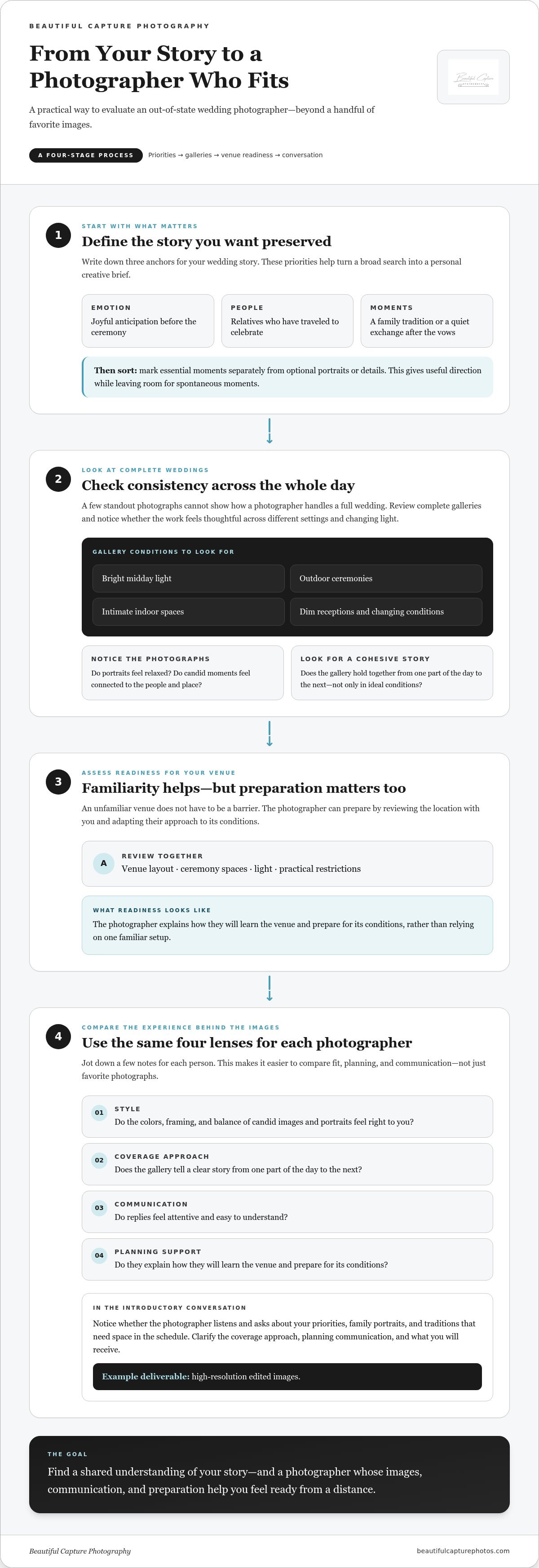
Planning a wedding from another state can leave you wondering whether your photographer will understand the setting, the pace of the day, and the moments that matter most. Begin with what you want your photographs to preserve. A clear sense of your priorities gives you a practical way to make decisions, even before every venue detail is settled.
Write down three things you want your wedding story to hold: emotion, people, and moments. Perhaps emotion means the joyful anticipation before the ceremony; people means the relatives who have traveled to celebrate; moments means a family tradition or a quiet exchange after the vows. These priorities turn a broad search into a personal creative brief. They also help put destination experience in perspective. Knowing a location can be useful, but it matters just as much that the photographer understands the story you want told.
What should your wedding photographs feel like?
Some images may be candid and documentary, holding a laugh, a tear, or the movement of a lively reception as it unfolds. Others may be gently guided, such as a portrait together in soft evening light. These approaches can work beautifully side by side. As you look through full wedding galleries, notice whether the photographs feel consistent across settings and whether the people in them seem at ease. The Wedding Photography Overview offers general context on wedding photography styles and practices, but your own response to the images is what helps reveal a genuine fit.
Ask yourselves: would we still love this photograph if the trend behind it had passed? Save examples that feel connected to your relationship, family, or favorite way of being together, then describe what draws you to them. Is it the closeness, the natural movement, or the unhurried feeling? Naming those preferences makes them easier to share and compare.
Which wedding moments matter most to you?
List the people, traditions, and transitions you’d be sad to miss. That might include a parent’s reaction, a cultural ritual, a reunion with a loved one, or the shift from a quiet ceremony to a joyful celebration. Then separate essential moments from optional portraits or details. This isn’t about making the day feel rigid; it gives your photographer useful direction while leaving room for spontaneous moments. For a deeper look at how personal meaning shapes a wedding story, explore emotional wedding photography.
With these priorities in hand, hiring a photographer for an out of state wedding becomes less about choosing someone who knows every corner of the destination and more about finding a shared understanding. Beautiful Capture Photography provides on-location wedding coverage with high-resolution edited images, bringing the celebration together in a cohesive visual story. A successful plan aligns your priorities, expectations, and logistics so distance doesn’t overshadow the feeling you want to remember.
How to Evaluate an Out-of-State Wedding Photographer's Experience and Fit
A polished portfolio can catch your eye, but a handful of favorite images won’t show how a photographer handles a whole wedding day. Ask to see complete galleries, then look for consistency: do indoor portraits, outdoor ceremonies, bright midday light, dim receptions, and changing conditions all feel thoughtfully photographed? Strong work should hold together across the day, not only in ideal settings.
Venue familiarity can be helpful, but it isn’t the only measure of readiness. A photographer can learn about an unfamiliar location by reviewing its layout, ceremony spaces, light, and practical restrictions with you. Your conversations should also show that they can adapt their approach rather than relying on a single familiar setup.
How can you judge a portfolio when the venue is unfamiliar?
Look for weddings with conditions similar to yours: an outdoor ceremony in open sun, an intimate indoor space, a large venue with several transitions, or a reception where the light changes after sunset. Notice whether portraits feel relaxed and candid moments feel connected to the people and place. A cohesive gallery helps you judge whether the photographer’s choices suit your day, even if the venue itself is new to them.
For a useful comparison, jot down a few notes for each photographer:
- Style: Do the colors, framing, and balance of candid images and portraits feel right to you?
- Coverage approach: Does the gallery tell a clear story from one part of the day to the next?
- Communication: Do their replies feel attentive and easy to understand?
- Planning support: Do they explain how they’ll learn the venue and prepare for its conditions?
This quick review helps you compare the experience behind the images, not just the images themselves.
What should you learn during an introductory conversation?
Notice how the photographer listens. Do they invite you to explain your priorities and the relationships that shape the day, such as who should be included in family portraits or which traditions need space in the schedule? Specific, thoughtful questions suggest they’re considering your wedding as your story, not a template.
Use the conversation to clarify the coverage approach, planning communication, and what you’ll receive. Beautiful Capture Photography’s wedding coverage includes high-resolution edited images. Discussing how your key moments fit into the coverage helps set shared expectations. For a broader checklist of agreement details, Understanding Wedding Photography Contracts can help you prepare for the conversation.
Trust matters, too. A clear explanation of how the photographer notices unscripted moments and offers gentle direction can help you picture what it will feel like to have them alongside you. If an on-location approach fits your vision, explore on-location wedding photography as you consider the right fit.
Travel, Contracts, and Communication: Compare the Details Before You Book
Once the creative fit feels promising, turn the travel plan and agreement into clear, written expectations. Distance can make small assumptions matter: one person may think lodging is already arranged, while the other expects to book it later. When hiring a photographer for an out of state wedding, clarity about responsibilities, costs, and timing helps prevent crossed wires from becoming wedding-week stress.
Travel arrangements and related expenses vary by assignment, so don’t rely on assumptions. The agreement should explain who arranges transportation, lodging, and local travel, and how associated expenses are documented and approved. It should also distinguish confirmed plans from items still to be decided. For example, if arriving the day before the wedding is part of the plan, record that timing rather than leaving it as a verbal understanding.
Which travel and contract details should be explicit?
Read the agreement as a shared plan, not just a summary of the booking. Check that it describes what happens if the schedule changes, the event is rescheduled, or the wedding is cancelled. Clear terms help both sides understand their responsibilities before travel is arranged and make it easier to identify details that need discussion.
- Travel: Who books and pays for transportation, lodging, and local travel? How are expenses recorded and approved before signing?
- Arrival and timing: What arrival time is planned, and is there a buffer before coverage begins?
- Coverage: What hours or portions of the day are included, and how are schedule changes handled?
- Deliverables and payment: What finished images are included, and when are payments due?
- Changes and cancellation: What do the written terms say about rescheduling, cancellation, and changes to the event?
Compare agreements using the same checklist. If one describes local transportation while another mentions only airfare, note the difference instead of assuming the missing detail is included. Putting each arrangement in writing makes the final plan easier to follow.
How can distance affect communication and planning?
Planning remotely works best when communication has a steady rhythm. Decide which channel you’ll use for routine updates, how quickly you can generally expect a reply, and when key planning conversations should happen. Put those milestones alongside wedding decisions, such as finalizing the schedule or confirming venue access, so important details don’t surface at the last moment.
It also helps to identify who will coordinate practical information. The couple may share venue rules and the latest schedule, while a planner or venue contact can provide access details or local guidance. Write down who owns each task, who receives updates, and how changes will be shared. That simple division of responsibilities keeps everyone working from the same plan and leaves more room to enjoy the celebration.
Before signing, make sure the travel plan, coverage, deliverables, payment milestones, and cancellation terms are easy to understand in writing. When the practical details are settled early, your attention can return to the people and moments you’re gathering to celebrate.
Plan Venue Research and Wedding-Day Logistics From a Distance
Once the venue is set, turn its details into a shared working plan. A photographer can prepare more thoughtfully when they know where key moments will happen, how people will move between spaces, and what the venue allows. For couples hiring a photographer for an out of state wedding, exchanging this information early helps bridge the distance and keeps the schedule grounded in the actual setting.
What venue information helps a photographer prepare?
Share the venue layout, access instructions, ceremony rules, and a useful contact for day-of questions. Include the locations you’re considering for portraits and the route between the ceremony, reception, and any other gathering spaces. If the venue has indoor and outdoor options, describe both without assuming which one you’ll use. This gives your photographer context to consider the setting while leaving room for conditions to change.
Build your planning sequence around the information as it becomes available:
- Gather venue details. Send the layout, access notes, ceremony and reception locations, restrictions, and relevant contact information.
- Share the shape of the day. Provide ceremony timing, planned transitions, and the moments or people you’ve identified as priorities.
- Discuss locations and movement. Review portrait options and how long it may take to move between spaces, including access or distance considerations.
- Coordinate the working schedule. Align photography priorities with the planner, venue, and ceremony timeline, allowing practical time for arrivals, portraits, and transitions.
- Review the final plan. Share the latest schedule and confirm who will communicate changes if the timing or location shifts.
This sequence gives your photographer a useful picture of the day well before guests arrive. For broader event-planning context, photography for special occasions explores how photography helps preserve meaningful milestones.
How do you make the wedding-day schedule workable?
A schedule needs breathing room. Account for the time it takes to travel between locations, gather family for portraits, and move from the ceremony into the next part of the celebration. Confirm who has the latest timeline and who can share updates with the photographer. A named contingency contact and agreed communication method can make unexpected changes easier to manage without leaving the couple to coordinate everything themselves.
Before the wedding, review the schedule with the people shaping it and confirm that the ceremony timing, venue access, portrait plan, and priority moments fit together. Beautiful Capture Photography provides on-location wedding coverage and captures genuine moments in high-resolution edited images. Explore on-location wedding photography as you plan a celebration that feels personal and well prepared.
Choose a Wedding Photography Experience That Preserves the Day
The right choice brings together more than a beautiful portfolio. It should feel like a good visual fit, a trusting working relationship, clear written terms, comfortable communication, and a practical plan for the wedding location. With those pieces aligned, hiring a photographer for an out of state wedding can feel less like managing distance and more like preparing to remember the day as it truly unfolded.
- Visual fit: The photographer’s complete galleries reflect the atmosphere and feeling you want to revisit.
- Trust: Their presence and direction help you feel comfortable being yourselves.
- Written terms: Coverage, finished images, travel arrangements, payment timing, and changes are clearly documented.
- Communication: You understand how planning conversations and updates will happen.
- Logistics: Venue details, timing, transitions, and key priorities have been shared and reviewed.
Use this checklist as a final sense check, not a demand for a perfectly choreographed day. The goal is to feel prepared enough to be present with the people around you, while your photographer has the context needed to notice the moments that matter.
What should couples expect from finished wedding photographs?
Beautiful Capture Photography delivers high-resolution edited images from its on-location wedding coverage. A considered edit helps the finished gallery feel cohesive, bringing the different settings, light, and emotions of the celebration into one visual story while preserving the details that make it personal. The result is a collection you can return to, whether you’re revisiting a quiet exchange or the joyful movement of the reception.
Finished images can also become part of your home and family life. Archival prints and albums offer a tactile way to revisit the day, while museum-quality canvases can give a favorite photograph a place on the wall. Thinking about how you’d like to enjoy the images later can help you decide which moments and details you most want preserved.
How can you make the next step feel simple?
Gather the details you already have: your date, venue, the moments you value, and any questions still on your mind. You don’t need a perfect schedule to begin a useful conversation. Sharing the atmosphere you hope to remember, perhaps intimate and unhurried, lively and full of family, or a blend of both, gives planning a personal starting point.
From there, the details can take shape one decision at a time. Beautiful Capture Photography provides on-location wedding photography with finished images that preserve the feeling of the day. Explore Beautiful Capture Photography’s wedding photography and begin planning coverage that feels true to your celebration.
Let Your Wedding Story Begin With a Clear Next Step
Distance may shape the planning, but it doesn’t have to define how connected you feel to the person documenting your wedding. As you move forward, keep one question close: when you look back years from now, what do you hope these photographs bring back to you? That answer can guide the conversations, choices, and small planning decisions still ahead.
Hiring a photographer for an out of state wedding can become a more personal experience when you share not only where and when you’re celebrating, but what the day means to you. You don’t need every detail perfectly settled to take the next step. A date, a venue, and a few thoughts about the people and feeling you want to remember are a lovely place to begin.
Beautiful Capture Photography provides on-location wedding photography for couples in Raleigh, Durham, Chapel Hill, Cary, Morrisville, Carrboro, Mebane, Greensboro, High Point, and Winston-Salem. Explore Beautiful Capture Photography’s wedding photography and start planning photographs that bring you back to the heart of your celebration.
Frequently Asked Questions
Is it worth hiring a photographer from another state for a wedding?
It can be a good fit when the photographer’s images and working manner feel right for your celebration. When hiring a photographer for an out of state wedding, consider whether you feel comfortable explaining family dynamics and asking questions. A destination’s scenery may be appealing, but connection matters too. Imagine reviewing a gallery together and discussing what feels authentic, rather than choosing based on location alone.
How far in advance should you hire an out-of-state wedding photographer?
Start researching as your date and venue begin to take shape, especially if you have a distinct visual style in mind. There isn’t one booking timeline that suits every wedding. A date during a busy local event season, for example, may affect travel and lodging plans, so early conversations can be useful. You’ll have more space to consider options without making a decision before you understand the arrangements.
What should an out-of-state wedding photography contract include?
A clear agreement should identify the wedding date, coverage, finished edited images, payment schedule, travel responsibilities, and terms for cancellation or rescheduling. Also look for details about what happens if the photographer can’t personally attend, if that situation is addressed in the agreement. Read the document as a whole, not just the travel paragraph, and request clarification in writing before signing so you can refer back to shared expectations.
How do wedding photographers handle travel expenses for out-of-state weddings?
Travel arrangements vary, so look for a written explanation of which expenses apply and who handles each booking. The agreement might distinguish transportation, lodging, and travel within the destination, and explain whether plans are booked directly or reimbursed. Before comparing proposals, check that you’re comparing the same responsibilities and inclusions. This makes it easier to account for the full arrangement in your budget rather than relying on an unclear headline figure.
Can an out-of-state photographer capture a venue they have never visited?
Yes, a photographer can prepare for an unfamiliar venue using a floor plan, access notes, a schedule, and information about ceremony rules. Share images of the spaces and point out where guests will move between events. A venue contact can clarify restrictions or access limits. A prior visit may be useful in some circumstances, but good preparation can begin with clear, practical information.
How can we meet and plan with our wedding photographer from another state?
Remote planning can still feel personal if you choose a regular way to talk and keep important decisions in one shared place. Video calls are useful for discussing visual preferences, while a shared document can hold the latest schedule and family-photo groupings. Couples planning from Raleigh, Durham, Chapel Hill, Cary, Morrisville, Carrboro, Mebane, Greensboro, High Point, or Winston-Salem can use this approach to keep details organized across distance.
What happens if travel delays affect the wedding photographer’s arrival?
Discuss the arrival plan and delay communication before booking, then make sure the relevant responsibilities are written into the agreement. For example, identify who will update the planner if travel timing changes and which moments should take priority if the schedule needs adjusting. Share the venue contact and a current timeline in advance. A contingency plan can’t prevent every delay, but it gives everyone a clear next step.


