

What if the most meaningful wedding photographs happen when nobody’s asking you to look at the camera? Documentary style wedding photography is built around noticing unscripted moments: a deep breath before the ceremony, a loved one’s reaction, or laughter spilling across the reception. It doesn’t mean your photographer disappears or leaves the day to chance. It means they observe carefully, anticipate what matters, and capture the story as it unfolds.
If the thought of hours of posing feels uncomfortable, you’re not alone. And if you’re wondering whether an unobtrusive photographer could miss an important moment, that’s a fair concern. This guide explains what documentary wedding photography can feel like, how a photographer balances attentiveness with a light touch, and how to share your priorities without scripting every scene. You’ll also find practical ways to prepare for relaxed portraits and story-rich images, so you can stay present while meaningful details are preserved.
Key Takeaways
- Documentary style wedding photography uses observation and composition to shape real events into a connected visual story.
- A wedding schedule helps the photographer anticipate meaningful moments without scripting reactions.
- Learn the differences between documentary, candid, and traditional photography so you can describe the experience you want.
- Prepare by sharing key people, personal priorities, and important timing, then adapt the plan to your venue and schedule.
- Set expectations for a story that follows the day as it unfolds, with images you can revisit in an album or print.
What Is Documentary Style Wedding Photography, and What Does It Capture?
Documentary style wedding photography observes real moments and shapes them into a visual story of your wedding. Rather than asking people to repeat reactions or follow a long sequence of poses, the photographer watches how the day unfolds and looks for images that reflect its atmosphere. In practice, that means capturing what happens naturally while making careful choices about timing, light, and framing. No approach can promise a photograph of every instant.
That attention begins before the ceremony. A photographer might notice the pause as you wait to enter, a parent adjusting a collar, or the look exchanged just before the doors open. During the vows, they can watch for a small smile, a hand held tightly, or a guest quietly wiping away a tear. The moments are unscripted, but recognizing and framing them takes care.
Documentary photography has a wider history and connection to photojournalism; What is documentary photography? offers a broader overview of the approach. At a wedding, that observational mindset helps preserve not only what happened, but also the feeling around it.
How documentary wedding photography differs from simply taking candid pictures
A candid photograph shows a moment without a posed setup. Documentary describes a broader way of telling the story, using observation and visual choices to connect images across the day. Both depend on attention and skill. A natural reaction still needs to be noticed and captured at the right time.
Anticipation helps the photographer respond as a moment develops. Knowing the schedule, for example, makes it easier to be ready as the ceremony begins or speeches turn emotional, without prompting anyone to perform. Framing, available light, and timing then shape each image. A close view can hold a private exchange, while a wider frame can place it within the room and among the guests.
What a wedding story can include beyond the ceremony
A wedding story isn’t limited to the vows, rings, or first dance. It can include meaningful details, the bustle of people arriving, a pause between events, and small gestures that reveal how loved ones connect. A relative carefully preparing a family keepsake or friends making room for one another on the dance floor can give the gallery a sense of place and relationship.
The rhythm matters, too. A full room celebrating brings movement and energy; a quiet conversation at the edge of the reception offers a softer counterpoint. Together, these images can reflect the celebration’s changing moods rather than present a string of isolated highlights. For a broader look at how photographs preserve feeling as well as events, explore emotional wedding photography.
How Documentary Wedding Photographers Tell a Story Without Orchestrating It
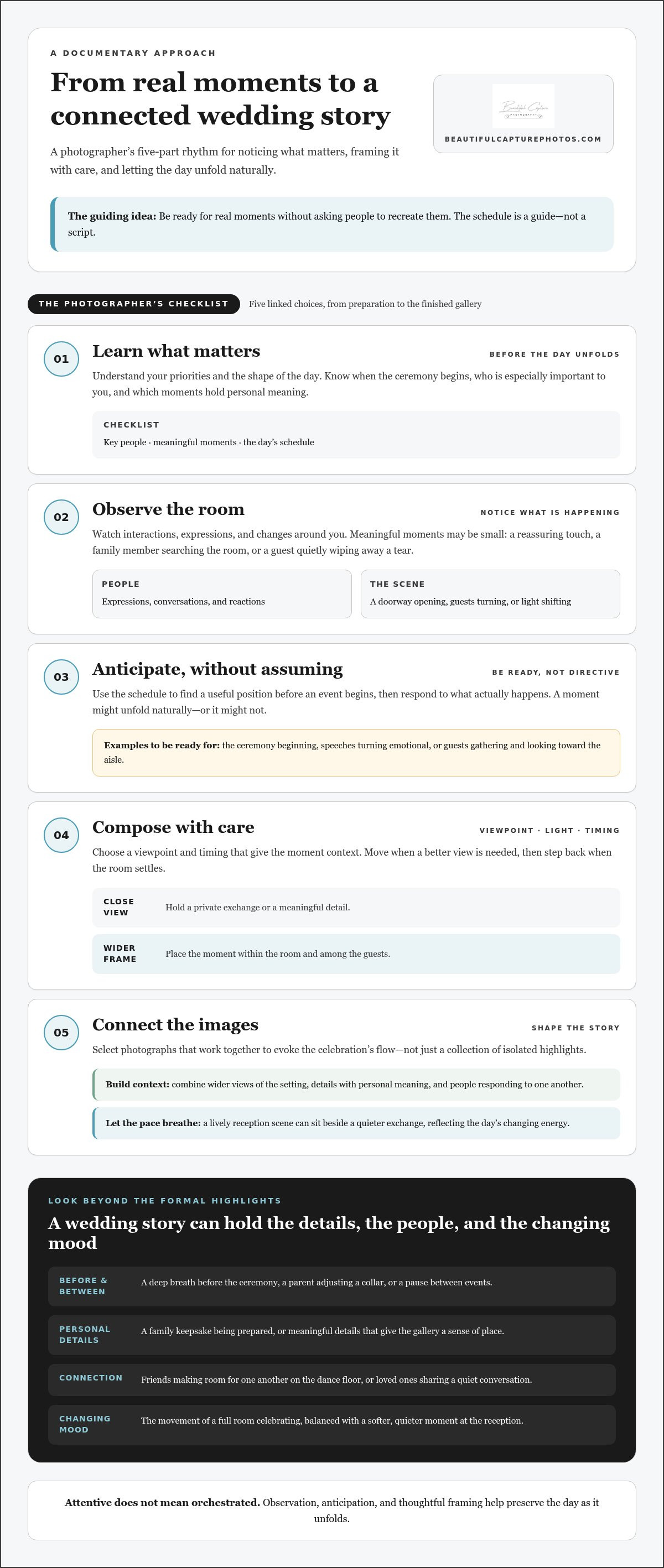
A documentary photographer isn’t simply waiting for something interesting to happen. They prepare by learning what matters to you, then stay attentive as the celebration moves from one part of the day to the next. Knowing when the ceremony begins, who is especially important to you, and which moments hold personal meaning helps the photographer be ready without directing how anyone should feel.
The approach follows a clear rhythm:
- Learn: Understand your priorities and the shape of the day.
- Observe: Notice interactions, expressions, and changes in the room.
- Anticipate: Pay attention to what may unfold next, without assuming it will.
- Compose: Choose a viewpoint, light, and timing that give the moment context.
- Connect: Select images that work together to evoke the celebration’s flow.
Anticipation and awareness matter more than a long pose list because they help a photographer respond to real moments without asking people to recreate them. The schedule is a guide, not a script. Being unobtrusive doesn’t mean staying in one place: a photographer may move to a better viewpoint as an important event unfolds, then step back when the room settles. That balance helps preserve the atmosphere while allowing meaningful parts of the day to be documented.
Observation and anticipation in the moments before something happens
Some of the most revealing reactions begin just before a formal event. As guests gather, a photographer might notice a family member searching the room for the couple or a friend offering a reassuring touch before the ceremony. These moments aren’t guaranteed, so attentive coverage means watching patiently rather than trying to manufacture them.
Expressions and conversations can change in an instant. A shift in the available light, a doorway opening, or guests turning toward the aisle may signal that the scene is changing. Understanding the schedule helps the photographer find a useful position, while careful observation helps them respond to what actually happens.
How composition and visual pacing make images feel like a story
A strong wedding gallery needs more than a collection of emotional close-ups. Wider views establish where a moment takes place and who is present; details can preserve an element with personal meaning; photographs of people responding to one another bring the feeling forward. That variety gives the viewer room to understand both the setting and the relationships within it.
Visual pacing matters, too. A lively reception scene can be followed by a quieter exchange, allowing the story to breathe rather than making every image feel equally loud. This thoughtful sequencing reflects the day’s changing energy. For a wider perspective on the genre’s storytelling roots, The history and purpose of documentary photography offers helpful context. In documentary style wedding photography, awareness shapes the individual frames, and composition helps them feel connected.
If this considered, story-led approach feels right for your celebration, explore on-location wedding photography as you imagine how your day could be documented.
Documentary vs. Candid vs. Traditional Wedding Photography: What Changes?
These labels can help you describe the photographs you’re drawn to, but they aren’t always used in exactly the same way. A useful distinction is how much the photographer directs the scene and whether the approach describes one kind of image or the story of the whole day. Documentary style wedding photography centers on observing events as they unfold, while traditional coverage usually includes more planned posing.
| Approach | Photographer direction | What the couple may experience |
|---|---|---|
| Documentary | Observes and responds to the day, with little interruption to real interactions. | More freedom to stay engaged with guests and events as they happen. |
| Candid | Captures a spontaneous, unposed moment; this describes an image, not necessarily the full-day method. | A natural reaction or interaction appears without a formal setup. |
| Traditional | Gives clearer direction for posed portraits and arranged group photographs. | More planned moments, with guidance on where to stand or how to pose. |
There can be overlap. A documentary gallery may include candid images, and traditional coverage can include spontaneous photographs between portraits. Treat the labels as helpful descriptions, not strict rules. A real wedding day often calls for a mix: attentive observation for much of the celebration, with planned time for photographs you know you want.
Is documentary wedding photography the same as candid photography?
Not quite. Candid describes how a particular image was made: people weren’t posed for that moment. Documentary describes a broader storytelling approach that can shape the coverage from one part of the day to another. Photographers and couples may use these terms differently, so focus on the experience you want rather than relying on a label alone.
Ask yourself: Do I want to spend most of the day interacting naturally, or would regular direction help me feel comfortable? Am I drawn to images that show events as they unfold, or do I prefer a more polished, arranged look? Your answers can clarify your priorities and help you explain them before the wedding.
Can documentary coverage still include portraits and family photographs?
Absolutely. Choosing documentary coverage doesn’t mean giving up family photographs or portraits you’ll treasure. Set aside time for essential groupings and couple portraits, then leave the rest of the celebration open to natural interactions. Planned photographs become one part of the story, alongside moments that weren’t arranged.
Before the wedding, share the people and combinations that matter most, especially relatives or friends whose presence is particularly meaningful. A clear, considered portrait plan helps these photographs feel organized without turning the whole day into a posed session. The goal is to make room for both: a few requested images and the freedom to be present for everything around them.
How to Prepare for Documentary Wedding Photography in North Carolina
Good preparation doesn’t mean planning every photograph. It gives your photographer the context to follow what matters while leaving room for the day to unfold naturally. For a celebration in Raleigh, Durham, Chapel Hill, or a nearby North Carolina community, share the actual venue and schedule rather than relying on a generic shot list. Clear priorities make it easier to move through the day with calm, attentive coverage.
- Share your priorities: Mention traditions, meaningful details, or moments you especially hope to remember.
- Name key people: Identify important family members and relationships, particularly if not everyone is familiar to the photographer.
- Explain the timing: Provide the schedule and note when and where significant events will happen.
What to share before a Raleigh-Durham or North Carolina wedding
Think beyond a list of formal photographs. Perhaps a family tradition happens before the ceremony, a loved one is traveling a long way to attend, or a particular part of the celebration carries special meaning. Sharing that context helps the photographer understand why an interaction matters, without asking anyone to recreate it. Include the essential family groupings you want, too, so those portraits can be planned rather than left to chance.
Venue details are useful as well. Explain how the day will move between spaces, such as getting ready indoors, a ceremony outside, and a reception in another room. That gives coverage a practical framework, whether your plans are in Raleigh, Durham, Chapel Hill, Cary, Morrisville, Carrboro, Mebane, Greensboro, High Point, or Winston-Salem. If your celebration includes meaningful gatherings beyond the ceremony, photography for special occasions offers a wider perspective on documenting life’s milestones.
How to make room for real moments in the wedding timeline
A packed schedule can make even a joyful day feel hurried. Leave breathing room around transitions, such as moving from the ceremony to the reception or gathering family for portraits. That pause can help guests settle, give you a moment to connect, and allow the photographer to respond if something meaningful unfolds along the way.
Consider how the venue’s indoor and outdoor spaces affect movement and available light. A plan that includes both might need a clear route between locations and enough flexibility for people to gather without being rushed. Changing light doesn’t make a moment less genuine; it simply shapes how the photographer works with the scene in front of them.
For documentary style wedding photography, your schedule should clarify the events that matter, not choreograph every interaction. Keep your priorities visible, then allow conversations, greetings, and small expressions to happen in their own time. Thoughtful on-location wedding photography coverage can preserve the celebration’s flow as well as its planned highlights.
Choosing Documentary Style Wedding Photography for a Story You Can Revisit
Documentary style wedding photography may suit you if you’d rather stay present with your guests than spend much of the celebration posing, and if you’re drawn to images that reflect real interactions as they unfold. It can be especially meaningful for couples who value the atmosphere around the main events, from the anticipation before the ceremony to the warmth of a gathering afterward.
If you feel most comfortable with frequent direction, carefully arranged scenes, or a specific planned image of each part of the day, a more guided approach may fit your preferences better. You don’t have to choose between candid storytelling and every portrait you hope to have. Decide where you’d like gentle direction and where you’d prefer space for the day to happen naturally.
Documentary coverage follows the events rather than guaranteeing a predetermined photograph of every moment. A meaningful reaction may happen outside the photographer’s view, or a planned moment may unfold differently than expected. Sharing your priorities ahead of time helps your photographer understand what matters most, while leaving room for the unexpected details that make the celebration yours.
What couples can expect from Beautiful Capture Photography
Beautiful Capture Photography provides on-location wedding photography with comprehensive event coverage designed to preserve the essence of your celebration. The approach makes room for significant events and quieter moments alike, resulting in high-resolution edited images that reflect the day’s people, places, and feeling. The aim is attentive storytelling, not directing every interaction or promising a particular unscripted scene.
Before the wedding, share the people, traditions, and parts of the day that are especially important to you. That context helps shape thoughtful coverage around your celebration while keeping expectations grounded: the photographer can be prepared to observe and respond, but genuine moments remain genuine because they aren’t staged on demand.
Turning wedding photographs into lasting keepsakes
Photographs can become part of your everyday life when they’re printed and displayed, rather than revisited only on a screen. A favorite image on the wall can bring a joyful exchange back to mind, while an album lets you return to the day’s changing rhythm, from its first gatherings to its last celebration. These tangible forms also invite family and friends to share in the story.
Museum-quality canvases, archival prints, and custom albums offer different ways to keep meaningful wedding photographs close. A single print can give a particularly cherished moment a place in your home; an album can hold a broader sequence of images and memories.
If this balance of observant storytelling and personal priorities feels right for your celebration, explore Beautiful Capture Photography’s wedding photography and imagine the story you’ll want to revisit.
Make Space for the Memories That Feel Like You
Before your wedding, take a quiet moment to consider how you want the day to feel, not just how you hope it will look. Which people, traditions, and small details would you want to remember years from now? Sharing those priorities gives your photographer a thoughtful starting point while leaving room for the unexpected moments that make the celebration uniquely yours.
That balance is at the heart of documentary style wedding photography: the day isn’t a performance to perfect, but a meaningful experience to be present for. You can still make space for portraits and family photographs, then let the rest of the celebration unfold without trying to control every frame. Later, the images can bring you back to expressions, connections, and atmosphere you might not have noticed in the moment.
When you’re ready to imagine how your own story could be photographed, explore wedding photography with Beautiful Capture Photography. Your day deserves to be remembered in a way that feels genuine to you, and that story begins with the moments you choose to make room for.
Frequently Asked Questions
What is documentary style wedding photography?
Documentary style wedding photography tells a wedding story through attentive images of events as they unfold. The photographer observes, anticipates, and composes around genuine interactions rather than directing every reaction. It’s more than a collection of candid pictures: details, relationships, and shifts in the day’s atmosphere can all help give the finished gallery a sense of place. No photographer can record every instant, so sharing your priorities helps guide what matters most.
Is documentary wedding photography completely unposed?
No, it doesn’t have to be completely unposed. Couples can include portraits or planned photographs alongside observational coverage, so you don’t need to choose between family pictures and natural moments. For example, you might arrange a brief portrait with grandparents, then return to visiting with guests rather than setting up formal photographs throughout the reception. Decide which parts of the day you’d like guided, and share those preferences in advance.
Can documentary wedding photography capture family portraits?
Yes, family portraits can be part of documentary wedding coverage. Make a short grouping list that identifies the people who should appear together, such as immediate family, grandparents, or siblings who rarely gather in one place. Use names and relationships so the groupings are easy to organize. If a family member has mobility or other needs that affect where portraits happen, include that detail in your planning notes.
How do I prepare for documentary wedding photography?
Share the venue address, schedule, important people, and meaningful traditions before the wedding. Add useful context, such as which entrance guests will use or whether a ceremony space changes into the reception area. For celebrations around Raleigh, Durham, Chapel Hill, Cary, Morrisville, Carrboro, Mebane, Greensboro, High Point, or Winston-Salem, details about the specific venue and day are more helpful than general assumptions about the region.
Does documentary wedding photography mean the photographer will not give direction?
No. A documentary-minded photographer can still offer practical direction when it helps, such as explaining where to meet for family portraits or giving a timing reminder before a ceremony begins. The difference is that guidance supports the day instead of routinely staging reactions. If direction helps you feel at ease, say so; if you’d rather have minimal prompting outside planned portraits, make that preference clear too.
Are documentary wedding photos always black and white?
No. Documentary describes an approach to photographing and telling a story, not a rule about color. A gallery may use color, black and white, or a combination, depending on the photographer’s editing choices and the feeling of each image. To understand the look you can expect, review complete wedding galleries rather than a few selected photographs, and notice how consistently the images work together from beginning to end.
What happens if it rains during an outdoor wedding?
Rain changes the setting, but the celebration can continue with a practical backup plan. Talk with your venue about an indoor option, covered areas, and how guests will move between spaces if the weather shifts. Share that plan with your photographer alongside the schedule. This preparation can reduce last-minute uncertainty, while leaving room for the day to unfold naturally whether the ceremony remains outdoors or moves inside.


