

What if planning an engagement session felt less like checking off a list and more like making time for the two of you? It’s natural to wonder when to book, what to wear, and whether you’ll feel comfortable in front of the camera. Your photos don’t need perfect poses or a complicated plan to feel like you.
A calm, shared approach can make those choices manageable. A meaningful on-location setting and professional guidance can help the experience feel personal, so you can focus on enjoying each other instead of performing for the camera.
This guide walks you through choosing a date and location, preparing outfits and small details together, and knowing what to expect during your session. You’ll come away with a clear plan, fewer unanswered questions, and room for the genuine moments that make your relationship yours.
Key Takeaways
- Start planning an engagement session by agreeing on how you want the photos to feel, then use that shared vision to guide practical choices.
- Balance a meaningful location with comfort, access, and travel time so the setting supports the experience instead of adding stress.
- Tell your photographer about your preferences, insecurities, accessibility needs, and boundaries. You don’t need to arrive knowing how to pose.
- Build a flexible session-day plan with extra time for travel and unexpected delays, especially around busy locations.
- Before booking, clarify the photographer’s approach, location plans, delivery details, and relevant policies.
Planning an Engagement Session Starts With the Feeling You Want to Remember
Planning an engagement session can be simple. It doesn’t need to feel like a performance, and you don’t have to arrive with a list of perfect poses. Think of it as time set aside to be together while a photographer helps preserve the way you connect, whether that means easy conversation, shared laughter, or a quiet walk in a place you love.
An engagement session is an on-location portrait experience focused on a couple’s connection, photographed in a setting that feels meaningful or comfortable to them.
Couples often schedule a session to celebrate their engagement and remember this season of life. The images may also be used for wedding materials, such as a save-the-date or wedding website. Engagement portraits have a place in the broader history of wedding photography, but your session doesn’t need to follow anyone else’s formula. Its purpose can be as personal as you want it to be.
What should an engagement session feel like?
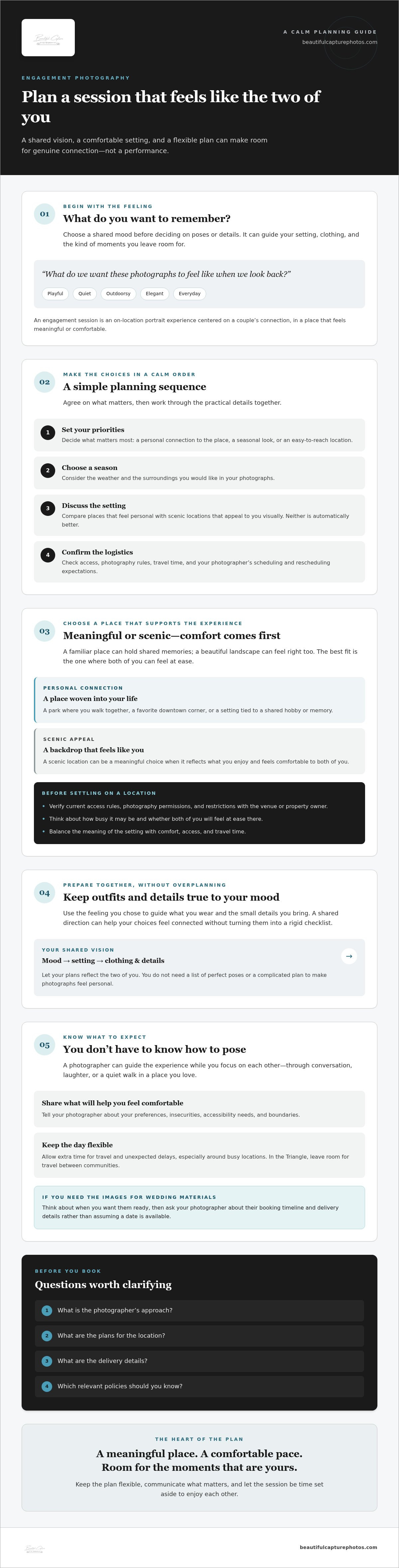
Start by asking each other, “What do we want these photographs to feel like when we look back?” One of you might picture a playful afternoon, while the other imagines something quiet and outdoorsy. You could choose an elegant look, a familiar neighborhood, or something comfortably everyday. Naming a shared mood gives you direction for choosing a setting and clothing without turning the session into a rigid shot list. Leave room for small, natural moments to unfold.
When should couples begin planning?
Start with how you hope to use the photographs and which season you’d enjoy being outside. If you need images for wedding materials, consider when you’ll want them ready, then ask your photographer about their booking timeline and delivery details instead of assuming a date is available. Planning an engagement session around those priorities can make the next choices clearer.
If you’re planning in the Triangle, leave flexibility for travel between communities and getting to your chosen location. A meaningful setting is lovely, but the day should also feel manageable. As you narrow down possibilities, consider how long the trip takes and whether the place will be comfortable for both of you. You don’t have to settle every detail at once. A shared sense of purpose is a calm place to begin.
Choose Your Date, Setting, and Priorities Before Planning Engagement Session Details
Once you know how you want the photographs to feel, make the practical choices in a calm order. Agree on your priorities, choose a season, discuss possible settings, then confirm the logistics. This sequence keeps planning an engagement session from turning into a pile of decisions all at once.
- Agree on priorities: Decide what matters most, such as a personal connection to the place, a particular seasonal look, or an easy-to-reach location.
- Choose a season: Consider the weather and the kind of surroundings you’d like in your photographs.
- Discuss the setting: Compare places that feel personal with scenic locations that appeal to you visually.
- Confirm logistics: Check access, photography rules, travel time, and your photographer’s scheduling and rescheduling expectations.
How do you choose a setting that feels personal?
Think about places connected to shared memories, hobbies, or everyday routines: the park where you walk together, a favorite downtown corner, or a landscape that reflects time spent outdoors. A scenic backdrop can be just as meaningful if it feels like you. Neither option is automatically better. Comfort and connection matter more than choosing the most impressive view. Browse engagement photography sessions for a sense of how an on-location experience can reflect a couple’s personality.
Before settling on a spot in Raleigh, Durham, Chapel Hill, Cary, or another Triangle community, contact the venue or property owner to verify current access rules, photography permissions, and restrictions. Consider how busy the location may be and whether both of you will feel at ease there. For more location inspiration, look for an engagement photography locations in North Carolina guide, then confirm details directly with your preferred venue. The Knot’s comprehensive guide to engagement photos offers additional ideas for choosing a location and planning other session details.
How should you choose a date and time?
Start with a season you both enjoy, then compare your schedules with the setting’s practical conditions. A leafy outdoor location, for example, may look different throughout the year, while an exposed spot can feel less comfortable in certain weather. Light also affects the mood and appearance of photographs, so talk with your photographer about timing rather than feeling you have to figure it out alone.
Keep a backup date or alternate setting in mind, especially if your plan depends on being outdoors. Before booking, ask how weather-related changes are handled and what the rescheduling expectations are. Clear answers help you choose a date with confidence while leaving flexibility for an unhurried session.
Make Engagement Session Preparation Comfortable, Not Complicated
You don’t need to know how to pose before you arrive. A photographer can offer direction as you go, helping you find natural ways to stand, move, and interact. Your part is simply to show up as yourselves. If the camera makes either of you uneasy, say so beforehand so your photographer can guide the experience with care.
A few shared preferences can shape the session without scripting every moment. You might tell your photographer you want the images to feel relaxed and playful, or that you’d rather avoid certain poses. Planning an engagement session works best when communication makes room for both partners to feel comfortable, not when you try to rehearse a perfect version of yourselves.
What should you discuss with your photographer beforehand?
Share the mood you’re hoping for, meaningful details you’d like included, and any photographs or poses you’d prefer to avoid. It’s also okay to mention insecurities, accessibility needs, personal boundaries, or anything that could affect your comfort at the location. These details can help your photographer understand how to support you.
Before session day, confirm the meeting point and ask what the session might look like, including how the photographer guides movement and interaction. If either of you feels camera-shy, ask what kind of direction to expect and whether you’ll have opportunities to pause or reset. Confirm the weather plan and delivery details in advance, too, so practical questions don’t linger in the back of your mind.
What should you bring, and what can you leave behind?
Let the setting and forecast guide what you pack. Comfortable shoes for walking, a layer for changing weather, or water for a warm day may be useful, depending on your plans. Choose clothing that suits your comfort and the mood you want. For more detailed outfit advice, use a dedicated engagement outfit guide rather than trying to solve every styling question here.
Props are optional. Bring something only if it holds meaning for both of you and feels natural to include, such as an item connected to a shared hobby. You don’t need a packed bag or a long list of extras. Check with your photographer before bringing anything that could affect the location or setup, and ask whether they have suggestions for your chosen setting. A light plan leaves more room to enjoy each other and respond naturally as the session unfolds.
Use a Simple Session-Day Plan to Keep Your Engagement Photos Relaxed
A relaxed session day doesn’t require a minute-by-minute schedule. A flexible sequence is enough: arrive, settle in, review the plan with your photographer, then ease into the experience. When planning an engagement session, leave breathing room around what you can’t fully control, especially travel and busy locations.
If you’re traveling between Triangle-area communities, add extra time instead of aiming to arrive at the last minute. Traffic, parking, and finding the meeting point can all take longer than expected. At a popular spot, confirm where you’ll meet and allow time to get comfortable before the camera comes out. You can also explore an on-location portrait session guide for more ideas about planning around an outdoor setting.
What happens when you arrive?
Meet at the agreed location and give yourselves a few moments to settle. Use that first conversation to revisit what matters most, how you’re feeling, and the pace you’d prefer. If one of you needs time to warm up, say so. A good session doesn’t have to begin at full energy.
Your photographer can offer gentle direction, such as suggesting a walk, an easy change of position, or a moment to look at each other. That gives you something to do without making every interaction feel staged. Natural movement and conversation can create variety: walking side by side, pausing to talk, or sharing a laugh may feel more like you than working through a long list of poses.
How can you stay flexible during the session?
Outdoor plans sometimes shift. Light may change, a path may be busier than expected, or the weather may call for a different spot or pace. Treat those moments as reasons to adjust, not as signs the session is going wrong. Your photographer can help you focus on what works in the moment while you keep your attention on each other.
Choose a few meaningful moments or ideas that matter most rather than trying to recreate every image you’ve saved. Reference photos can help explain a mood, but they don’t need to become a checklist. Follow your photographer’s guidance and speak up if a pose, location, or activity doesn’t feel comfortable. A small adjustment can make it easier to relax and stay present.
For professional guidance during a natural, on-location session, explore engagement photography with Beautiful Capture Photography.
Turn Your Engagement Session Plan Into Photographs You’ll Want to Keep
A thoughtful plan matters, but the photographer you choose also shapes how the session feels and how your connection comes through in the photographs. As you compare options, look beyond a few favorite images. Consider whether the photographer’s work feels genuine to you and whether their communication makes it easy to ask questions and share preferences.
How do you know a photographer is the right fit?
Review engagement portraits and other relevant on-location work. Do the couples look comfortable and connected, or do the images feel more posed than you’d like? There’s no single right style. Look for work that reflects the mood you hope to remember, and notice whether the photographer shows variety across people and settings.
During your conversation, ask how they guide couples who feel camera-shy, what communication to expect before the session, and how they adapt if weather or a location changes the plan. A photographer who listens and welcomes discussion can help you feel more at ease. Before booking, confirm the location plan, travel or access considerations, delivery details, and relevant policies. Check what’s included rather than assuming a particular number or type of photographs, print, or other item comes with the session. Clear answers help you decide with confidence.
What should you do after the session?
Before the session, ask what happens afterward, including how and when you can expect to receive your photographs and how they’ll be shared. Delivery processes differ, so confirm the details with the photographer you choose. That way, you’ll know what to expect instead of wondering when the images will arrive.
Once you’ve seen the photographs, consider how you’d like to enjoy them beyond a screen. A few favorites might become archival prints, an album, or a canvas, depending on the available options and what feels right for your home. Beautiful Capture Photography offers archival prints, albums, and museum-quality canvases as finished ways to display your photographs. Confirm product options and details directly with the photographer rather than assuming they’re part of a session.
Planning an engagement session is about making choices that support a personal, comfortable experience, then trusting the process enough to be present with each other. If you’re ready to explore an on-location session, explore an on-location engagement session with Beautiful Capture Photography.
Make Room for the Moments That Feel Like You
Planning an engagement session doesn’t mean choreographing every detail. Let a shared feeling guide your choices, confirm the practical details with your photographer, and give yourselves permission to be present rather than perfect. A meaningful setting and a little flexibility can help the photographs reflect your connection.
Beautiful Capture Photography offers on-location engagement photography in Raleigh, Durham, Chapel Hill, Cary, Morrisville, Carrboro, Mebane, Greensboro, High Point, and Winston-Salem. If you’re ready to plan a session around your relationship and a place you choose, explore an on-location engagement session.
You don’t need to have every answer before you begin. Start with what matters to you both, and let the rest come together one thoughtful choice at a time.
Frequently Asked Questions
How far in advance should you plan an engagement session?
Start planning once you have a preferred season or a date tied to your wedding plans, then ask your photographer about their booking timeline. Availability varies, so don’t assume a particular date is open. If you need the photographs for save-the-dates or another wedding detail, ask about delivery timing too. That gives you a practical window to choose a location and coordinate your plans without rushing.
What should you wear to an engagement session?
Choose clothing that feels comfortable, suits your chosen setting, and fits the mood you want in the photographs. Coordinate with each other without feeling you need to match exactly. Complementary colors and similar levels of formality can help your outfits feel cohesive. Consider how easily you can move and walk in what you wear. If you’re unsure, ask your photographer for guidance based on the location and season.
Do you need to know how to pose for engagement photos?
No, you don’t need posing experience to enjoy engagement photos. Your photographer can offer direction and suggest simple movement or interaction, such as walking together or pausing to talk. Tell them if you feel camera-shy or have poses you’d rather avoid. As you plan, focus on being comfortable with each other instead of trying to memorize poses. Natural conversation can help the photographs feel more like you.
Where should you take engagement photos in Raleigh or Durham?
Choose a place that feels meaningful, comfortable, or visually appealing to both of you. In Raleigh or Durham, you might look for a favorite outdoor spot, a familiar neighborhood, or a setting connected to a shared memory. Compare travel time, accessibility, and expected crowds, then contact the venue or property owner to confirm current photography permissions. Beautiful Capture Photography serves couples in Raleigh, Durham, and nearby Triangle communities.
What happens if it rains on the day of your engagement session?
If rain is in the forecast, contact your photographer and follow the weather and rescheduling plan you discussed. Depending on conditions and location, you may be able to adjust the timing, choose another suitable setting, or reschedule. Policies vary, so confirm them before booking instead of relying on assumptions. A backup plan can ease day-of uncertainty and help you make a comfortable decision together.
How long does an engagement session usually take?
Session length varies by photographer and by the plans you make, so ask about the expected duration before booking. The location, travel between spots, and activities you’d like to include can affect the schedule. Confirm the timing directly with your photographer, and allow extra time to arrive, park, and settle in. That way, you’re less likely to feel rushed before the photographs begin.
Should you bring props to an engagement session?
Props are optional, so bring one only if it feels meaningful and natural to both of you. An item connected to a shared hobby or familiar routine may add a personal touch, but props aren’t necessary for the photographs to feel distinctive. Consider whether an item is practical for your chosen setting, and check with your photographer beforehand if you’re unsure. Keeping things simple leaves more room for genuine interaction.


